The Alpha course is an introduction to the Christian faith and gives an opportunity to explore the meaning of life through thought provoking presentations and small group discussion where the guests set the agenda and where no question is off limits. Over the last 30 years, Alpha has been done by over 28 million people worldwide – in over 160 countries and in more than 100 languages, and in many church denominations. For more information, please go to https://www.alpha.org/about/
I wrote these verses about a newcomer’s experience of the course…
Week 1
Sitting near the Church door, my head is in a spin Watching all the ‘weirdos’ making their way in.
I could be watching Emmerdale and Masterchef tonight Instead I’m doing Alpha – something’s not quite right!
Well, here I go, I’m out the car; can’t leave it any longer, Three pints of lager in the pub has left me feeling stronger!
A friendly lady welcomes me and offers me some wine Already now I’m thinking ‘this is gonna be just fine!’
My badge in place, I’m in group 3, I have something to drink; Plush carpet and some comfy chairs; I’m settled in – ‘chink chink’!
It would be so much easier to stay away next week, If the food was really awful and the group leader a freak!
But the food is really rather good – and the leader’s almost normal. It’s not church as I remember, but disarmingly informal.
Week 2
I’m back again for the second week and ‘Why did Jesus die?’ A gruesome slide from ‘The Passion’ film put me off my chicken pie!
But I learnt that Jesus died for me; on the cross he took my place God (they say) forgives me, and extends me lots of grace.
One other thing I noticed… the people here with me; Not one of them has two heads as far as I can see!
And the jokes the leader uses are quality indeed To try and find some better ones, there really is no need!
Week 3
Week three rolls round, the topic is ‘Faith: how can I be sure?’ I still don’t think I am just yet, but I haven’t fled out the door!
I can’t believe I’ve done three weeks; my friends think I’ve gone bonkers. They think (like me before the course) that church is full of plonkers!
While still unsure, it makes more sense now I’ve heard it set out well; I’m beginning to think it could be true – and there’s no hype, no hard sell.
The leaders of my group are genuine and kind Whatever comes up in discussion, they really don’t seem to mind.
Week 4
Week 4’s the first time that we sing, so it is rather scary;
My voice sounds like a crow’s, and not a sweet canary!
The talk today is all on prayer – why pray, when and how? I bet my group are praying, ‘God, improve his singing now!’
I have tried praying privately – just every now and then; Afterwards, I felt such peace; so, worth trying it again.
Week 5
Week 5 already! Incredible! We’re almost half way through. All about the Bible through which God can speak to you.
‘Don’t start with Job or Leviticus’ is the advice they tend to give; I tried Leviticus anyway and lost the will to live!
They said to start with Matthew and ask God to speak to you. The bits I’ve read have come alive and I see this book anew!
It’s only when you try it that you see it really works, Within its ancient pages great revelation lurks.
Week 6
Week 6 comes round, the topic is ‘Does God really guide?’ He might call me to Afghanistan – I very nearly cried!
The food and drink are still so good – and plentiful and free; My weight’s gone up from ten stone five to nearly twelve stone three!
The huge amounts of sweeties don’t help the cause one bit, The trousers that I wore this week – embarrassingly – split!
Weekend Away
I finally found the venue for the Alpha weekend away (God really does guide!) Oh my gosh, I’m glad I came – what a place to stay!
In a lovely rural home, in beautiful countryside Canal and ancient church, and plenty more besides
This is such a stunning place, a chance to leave behind All my usual problems and life’s relentless, daily grind
Saturday’s sessions were informative, and quite emotional too All on the Holy Spirit and what He does for you
First, who’s the Holy Spirit – a person, not an ‘it’ (apparently) And certainly not a ghost! A relief, I must admit.
After coffee, the Holy Spirit and just what does He do? I confess before today, I hadn’t got a clue.
The afternoon talk on being filled was quite a revelation; No thunderbolts or lightning – more a heart-warming sensation.
A growing sense that God is real and, yes, He does love me Taking down walls and letting Him in seems to be the key.
Emotional, but not hyped up; it’s really been okay; And now I am a Christian – I said ‘Yes’ to God today.
There’s more food here than home on Thursday night; My shirt and belt and trousers are embarrassingly tight!
I’m really looking forward now to weeks seven through to ten; And if that is not enough for me, I might do the course again!
Inwardly changed,
Completely rearranged.
God welcomed in,
Dealt with my sin.
Renewed my heart;
A clean, fresh start.
Going down, sin washed away
Coming up, new life God’s way.
With this outward sign (baptism)
I draw the line
On a chequered past…
Now forward fast!
God and me
Making history.
I now declare
My love affair
With a God who’s turned my life around,
And set my feet on solid ground.
A world once seen in black and white
Now in colour – vivid, bright!
Life with God challenges me
To be the best that I can be.
No longer doing life alone,
I know now I am going home.
Today I say most publicly
The future is – God with me.
In my last blog, we looked at the Biblical basis for healing. In this one, we’ll look at a blueprint for healing. Hopefully, the last blog convinced you that praying for healing is a normal part of the Christian life. It was, if you like, the ‘why’ of healing. This is now the ‘how’ – this is where it gets more practical.
The ‘Now’ and the ‘Not Yet’
But first, let me address this question. Does everyone get healed? You won’t be at all surprised to hear that the answer is ‘no’. You might know of people who have been prayed for but who have not been healed. Perhaps you have been prayed for and not experienced healing.
We live in the tension of the ‘now’ and the ‘not yet’. As we pray the Lord’s prayer, ‘Your Kingdom come, your will be done on earth as it is in heaven‘, we see evidence of His Kingdom breaking through – particularly when the spiritually lost are saved (by our Saviour Jesus), the sick are healed from illness or disease and the oppressed and tormented are set free from oppression and torment. But sometimes, we are left perplexed or disappointed as little or nothing appears to happen.
The reality is that only when Jesus comes again (His second coming) in all His glory (not as a baby) will we live completely free of sin, sickness, oppression, etc. D day in June 1944 (the Normandy landings) was the decisive phase of WW2. D day laid the foundations for the allied victory over Germany. After this successful campaign, it was generally felt that total victory was only a matter of time. The tide had turned. VE day (‘Victory in Europe’ day), when Germany completely surrendered, was eleven months later in May 1945. Between June 1944 and May 1945, the allies fought more battles and suffered more casualties, even while they lived in anticipation of complete victory.
Living as a Christian today is a bit like living between D day and VE day. Our D day was the crucifixion and resurrection of Jesus. It was the decisive battle in the spiritual realm where satan was defeated. Jesus triumphed over sin and death by rising to new life. Yet, our VE day (total victory) isn’t until Jesus returns. In the meantime, we continue to share the earth with satan and his demon followers. While the war is won, there will be plenty of battles – and we won’t win them all.
In our Christian lives, we have a choice. We can emphasise the ‘not yet’ (and many do, believing that healing is not available now and push it off until Christ’s return); or we can emphasise the ‘now’ by relentlessly pursuing what might be available to us NOW in terms of God’s Kingdom coming. After all, God has not placed limits anywhere on what He is prepared to release to His followers now.
There shall be no end to the increase of His government and of peace.
Isaiah 9.7 (Amplified Bible)
Obedience, Perspective & Mystery
A few other points before we move on to the ‘how’:
Obedience. We are called to be obedient, not successful. If we are truly being obedient to God, we will go after healing (as I explained in my last blog). The outcomes of our healing prayers are up to God, not us! It is also true that the more people we pray for, the more people we will see healed.
Perspective. Consider how many people were healed and how many were not healed in the encounter recorded by the Apostle John in his gospel (John 5.1-15). How do you think the media today would have presented that story? It’s so important to keep looking at what God is doing, not at what He isn’t doing. Otherwise, we risk being offended by God or, worse still, we risk unbelief. The danger then is that, in our thinking, we put God on trial. But He’s not on trial – we are! Will we live the life of faith? God has nothing to prove, and He’s very secure in Himself.
Mystery. I’m not saying you should simply ignore your doubts or questions. But I would encourage you to make the deliberate choice of not letting them overshadow you or diminish you. Surrender your right to understand everything. We need to recapture the sense of spiritual mystery. Christianity is called ‘the faith’, not ‘the understanding’. We won’t always understand God’s acts or timing. If we only obey when we understand, we effectively diminish God to someone in our own image. But no one made in our image is worthy of our worship!
______________________________________
In April 2019, we had an Airbnb guest staying with us called Terry who was part of the dredging team at the canal in Gloucester. He was a big, burly, ‘no nonsense’ Yorkshireman! In January 2019, he had had an operation on his back to relieve pain from sciatica. However, during the operation, Terry thinks they may have damaged nerves or tendons because his left leg had become numb and regularly gave way. He could not move his left big toe as he said he could not get the message from his brain to his toe! Apparently his wife kept saying to him, “Stop staring at your bloody foot!” He laughed out loud as he told me how he tried to get his toe to move.
I told him that God heals today; would he like me to pray for him. He said, “You can if you like. Just like me mam!” Like so many, he went to church as a kid, but left it behind as he got older. After praying for him, he tried out his foot. He started moving his left big toe! He came back to us after work today, having done a lot of walking. He said his leg had not given way as usual. He demonstrated again that he could still wiggle his toes! He said he’d told his sons back home what had happened!
_____________________________________
Five Step Prayer Model
There isn’t just one model for praying for the sick that Jesus used. Sometimes He commanded their healing, sometimes He touched people, sometimes He involved the recipient in the process by asking them to do something (eg. the leper going to show himself to the priest). Sometimes, He did strange things like spitting on his hand and touching their tongues or making mud and putting it on their eyes.
At the wedding in Cana, Galilee, Jesus’ mother Mary said to His disciples, ‘Do whatever He tells you’. That is the best principle to follow! But, if it is out of the ordinary, be absolutely sure! Remember, we are co-labouring with Him in the ‘Great Co-mission’ to usher in His Kingdom.
When the Son of Man comes, will He find faith on the earth?
Luke 18.8, Jesus speaking
The five step prayer model was first introduced by John Wimber who founded the global Vineyard church movement and who brought back to the western church an appreciation of the gifts and power of the Holy Spirit. Dr Randy Clark has also written extensively (and very helpfully) on it.
1. Interview
In Mark 9.21 Jesus interviewed the father of a boy who needed healing. The purpose of asking questions is to make the ministry more loving and effective. Questions like…
• What’s your name? • How can I pray for you? • How long have you had this condition? • Do you know the cause?
You also want to try and understand the root cause of someone’s sickness. It could be:
An afflicting spirit.
Genetic causes – generational curses which come down a family line.
Sickness rooted in the soul (mind, will and emotions). Psychoneuroimmunology describes the interactions between the emotional state, nervous system function and the immune system. Investigations have shown that the mind and attitude play a significant role in the functioning of the immune system. In Textbook of Natural Medicine(5th edition) by Murray & Nowicki, they say: “Many clinical and experimental studies have clearly demonstrated that stress, personality, attitude and emotion are…contributory in suppressing the immune system as well as leading to the development of many diseases.” See https://www.sciencedirect.com/topics/medicine-and-dentistry/ psychoneuroimmunology). If you google “Can forgiveness help arthritis?”, you might be surprised at how much the link is made between the emotional (mental) and the physiological (physical). Here is a good testimony – https://globalawakening.com/trips /trip-testimonies/sept-2017-brazil/forgiveness-leads-to-healing-of-arthritis.
Sickness from natural causes such as accident or injury.
Lifestyle issues, eg lack of rest, poor diet, lack of exercise, stress.
So, you might ask questions like:
Do you have a doctor’s diagnosis?
Did someone cause this condition?
Have you forgiven them? (unforgiveness can be a hindrance to healing; see below).
Did any significant or traumatic event happen in your life in the 12 months before your condition started?
As you ask questions, try to be attentive to what the Holy Spirit might say to you or show you. He may give you a word of knowledge (see my last blog) or prophetic word that takes you straight to the root cause of the illness.
However, healing of the condition is not dependent on your understanding the cause of it. God can heal it anyway, however ignorant you are.
Explain to the prayee what might happen as you pray in terms of physical sensations (eg heat or cold in affected area, tingling, a sense of peace) and ask them to tell you what they feel as it happens – not to wait politely until the end of the prayer! Explain that healing might come totally or partially, immediately or subsequently.
Remember: be sensitive, loving and gentle in addressing the prayee. Feel free to be bold and authoritative in addressing the sickness!
2. Diagnosis & Prayer Selection
As I have shown in previous blogs in this series, Jesus and His disciples did not pray petitionary prayers. They commanded healing every time. And their commanding prayers were not directed at God but at people’s conditions. Some examples…
“…Jesus bent over [Simon’s mother in law] and rebuked the fever and it left her” (Luke 4.39).
“[Jesus] said to the paralytic ‘I tell you, get up, take your mat and go home’” (Mark 2.10).
[Jesus] took her by the hand and said to her ‘Little girl, I say to you, get up!’
Mark 5.41
“Turning towards the dead woman, Peter said to Tabitha, ‘Get up!’ She opened her eyes and sat up” (Acts 9.40).
The power is in the word. How did God create? He spoke things into being; He didn’t fashion them with His hands from mud! Words that have their origin in the heart of the Father are powerful – they release life. So, use your God given authority and command healing – always in the name of Jesus our Saviour. It is only through Jesus that healing comes.
A petitioning prayer is something like this: “Father, I ask you to heal Fred’s ankle and remove the swelling and pain. In Jesus’ name”. A commanding prayer is, “Ankle, be healed. All swelling and pain leave now, in the name of Jesus”. For healing deafness or impaired hearing, you might pray “I command a new eardrum to be formed in Jesus’ name”.
If unforgiveness is an issue, lead the person in a prayer of forgiveness before continuing to pray for healing.
If pain increases or simply moves to another part of the body, Randy Clark says that is usually a sign of an afflicting spirit. If you think it’s an afflicting spirit, command the spirit to leave in the name of Jesus. You may have to repeat the command a few times.
3. Prayer for Healing
Posture. I would normally pray standing, unless the person seeking prayer is not able to stand. Give the prayee space, as far as this is possible. Arms around shoulders and hugging are not appropriate during ministry. This is best left until after the ministry time (if at all). You might want to stand to the side of the prayee, so that you can see their face.
Ask the prayee to close his/her eyes and to put their hands forward as though they were going to receive something (this gesture is more symbolic than a requirement). You should keep your eyes open and watch for signs of the Holy Spirits presence (see below). Ask the prayee not to pray; it’s for them to receive. If they appear weak or unsteady on their feet, get some chairs and pray sitting down.
Laying on Hands. Jesus laid his hands on people (see Matthew 8.3 and 19.15). If it is appropriate, ask the prayee for permission to place your hand on the affected area. When the problem is in a sensitive area, simply ask to lay your hand on their shoulder or outstretched hands. People are often particular about their hair (eg ladies with expensive ‘hair dos’ or men with gelled hair!), so it is inappropriate to place hands fully on the head without prior permission. It could be a distraction or an irritation for the prayee.
Waiting. Wait, watch, listen and pray for discernment. Waiting is important. Pray for words or pictures. Try and discern what the Holy Spirit is saying/doing and allow this to inform your praying. Encourage the prayee to receive from the Holy Spirit and to stay engaged with Him. Wait for Him; bless and honour what the Lord is doing. This can be a scary time, because we are relying not on ourselves, but totally on the Holy Spirit to come. The good news is that the Holy Spirit always comes. He may not always do what we ask or expect but He always comes.
Watching. Keep your eyes open and watch for signs of the Holy Spirit’s presence, for example shaking, fluttering of eyelids, perspiration, swaying. Sometimes their skin may colour up. As you pray, the prayee might appear anxious or troubled. If you keep your eyes closed, you will miss these signs. The prayee will often feel something long before you notice anything, which is why it is important to ask them to tell you immediately they experience anything.
______________________________________
In late May 2019, Alice says: “I had been suffering from migraines on and off for nine years now. Every few months, I would get a cluster of three or four, making me bedbound for about four days. They tended to occur when I was stressed. I found them really debilitating, leaving me unable to leave my bed for a few days due to the intense pain. I could not get it under control, no matter how hard I tried or pretended it wasn’t there. Once the pain did eventually leave, I would be left with visual disturbances for a couple of weeks and be extremely tired. I went to doctors and opticians to try and get it under control. I was prescribed different medications, pain relief and glasses but nothing seemed to work.
“The migraines had been getting more frequent due to increased stress levels and I mentioned it to a friend as I was leaving church on 21 April, about five weeks ago. She prayed for me, that my vision would return to normal and for the migraines to subside.I did not notice anything immediately, but then soon realised my vision had returned to normal. Also, I haven’t had any migraines or symptoms since I was prayed for! I am currently finishing my nursing degree at university and about to move to London to start work, so I think if there ever was a time to be stressed and to get migraines, it would be now!
“In the week after I was prayed for (about four weeks ago), I had a follow up appointment about my migraines with a doctor. She started me on a new medication. I have not needed to use the newly prescribed medication!“
____________________________________
4. Stop and Re-interview
If after a while the way you are praying is making no difference, take stock. Perhaps revisit the diagnosis – it might be a different root cause you need to address.
Jesus had to pray for a blind man twice before his sight was fully restored (Mark 8.22-25).
Ask the person ‘What’s going on?’ Other questions you might ask…
• Would you try to remember any significant event? • Have any other members of your family ever had this condition? • Do you have a strong fear of anything? • Is anyone angry with you or your family (maybe a curse)? • Has anyone ever pronounced a curse over you or your family that you know of? • Have you ever participated in any kind of occultic activity?
You should stop praying:
• When the person is healed. • When they want you to stop. • When you sense the Holy Spirit wants you to stop. • When you aren’t gaining any more ground.
Remember, you are working with the comforter and counsellor, so use encouraging words only. Satan is the accuser, bringing shame and condemnation, eg ‘you don’t have enough faith’.
5. Post Prayer Suggestions
If the prayee is healed:
encourage them to give thanks to God.
Encourage them to tell others.
If the condition was related to their lifestyle, advise them to make some lifestyle changes that will help prevent the problem returning.
If the person is not healed:
Remind them of God’s love for them.
Keep them encouraged by sharing good news stories of breakthroughs relating to their condition.
Offer or arrange practical help and support where needed.
Offer to pray again next time. Take a look at Jesus’s teaching on persistent prayer (Luke 11.5-13). I made a simple promise to God that I would keep praying for people until they die, until Jesus comes again or until they get healed. That covers all the bases!
And now these three remain: faith, hope and love. But the greatest of these is love.
1 Corinthians 13.13
Something always happens. We might not see or observe anything, but something always happens.
Possible Obstacles to Healing
We can’t be prescriptive about what might hinder healing. We need to ask God for insight. But some common obstacles are…
Denial. If you deny forgiveness to someone who has wronged you, this can be a hindrance to your healing. After telling the parable of Unmerciful Servant, Jesus said: “This is how my Heavenly Father will treat you unless you forgive your brother from the heart” (Matthew 18.21-35). But unforgiveness is not always a hindrance to healing because God is loving and gracious, not legalistic. I heard the testimony of someone with arthritis who came forward for prayer. After several unsuccessful prayers, it turned out she had not forgiven someone from her past. She felt unable to do so, despite being advised it might hinder her healing from arthritis. Subsequently, God healed her anyway and she was so overwhelmed by His kindness and love that she fell to her knees and forgave the person that a few moments earlier she felt unable to forgive.
Forgive and you will be forgiven.
Luke 6.38 (Jesus speaking)
Delay. It’s not because God doesn’t want you to be healed. But I think sometimes He delays healing while He deals with other issues in you that He considers more important. His priorities don’t necessarily match yours!
Doubt. You don’t ask for healing prayer because you doubt whether God wants to or is able to heal you. Don’t allow your experience (or lack of experience of healing) to determine your theology; rather, allow your theology (see my last blog) to determine your experience. This will lead you to say: “There is more to go after than I have experienced in my Christian life so far.”
Deception. You might tell yourself that your prayer need is too trivial: “There are people with greater needs than me”. That’s the enemy whispering in your ear! God can heal your hurting knee as well as their broken leg. He has huge capacity!
Dignity. You are too proud to ask; it’s beneath your dignity. In James 4.6 (NIV) it says: “God opposes the proud, but shows favour to [or ‘gives grace to’] the humble.”
Disappointment. “I’ve had prayer before and nothing happened”. Disappointment can lead to doubt and unbelief. I would encourage you not to give up. Persist in seeking healing. I would encourage you to read Luke 18.1-8 in the Message paraphrase on the theme of persistence in prayer!
Finally…
Go for it! You have little to lose and so much to gain! Partner with our Heavenly Father to demonstrate to a hurting world just how powerful and loving and kind our God is. Do send me any stories of your encounters. I’d love to hear how you get on.
_________________________________________
In September 2019 Liz says: “In July at a Christian summer festival, on the last day, I was at the healing prayer ministry teaching. I was standing at the back, perching on an upturned plastic dustbin. I was in so much pain with my back that I couldn’t sit on a chair and I couldn’t stand for long either, so perching on something like a bar stool or an upturned dust bin was the only way I could sit for long periods. Even then, I was shuffling about and having to get up and walk around. At the end of the teaching, the leader asked if anyone wanted prayer for a physical condition to please put their hands up. Many hands, including mine went up.
“The person next to me offered to pray for me. The words he came out with were perfect for me and he encouraged me to speak out about all my healing (I didn’t even tell him I’d been healed before of a broken back, a broken sternum and a broken wrist) and to pray for others to be healed. Although I felt no different physically, I felt a whole lot better mentally and felt really encouraged to tell people about the way I have been healed in the past. I then made my way over to the big top and found others from my church. I started worshipping my heart out. After the worship, without thinking, I sat down.
“The previous days I had gone outside the Big top and laid down on the grass so I could still listen to the talk. After about ten minutes, a friend said, “Liz you are sitting down; are you ok? “Oh, my goodness yes; I have no pain at all, I’ve just had prayer! Praise the Lord! He’s done it again!” In the last Big top celebration that day, they asked for anyone who would like to give testimony to go to the front. Without any hesitation I ran to the front, wanting to give my testimony to the several thousand people in the tent. There were too many for us all to share and I didn’t get my chance. However, being willing and unphased to go up there in the first place gave me even more courage to share with others when I got home.”
“Two weeks later, my back was still good. I could sit and stand with no pain. I was on my way to a weekend Christian conference. It was a gloriously sunny day and I was looking forward to cooling off in the outdoor swimming pool when I got there after my 4 hour journey. Yes, 4 hours non-stop driving and no back pain! I love swimming and used to be a competitive swimmer in my teems and late 20s and would regularly swim 2000-3000 meters in a training session. Since breaking my back in 2015, although I had been healed through prayer at church, I could not swim more than 2 lengths before the pain kicked in. I arrived at the conference, unpacked my bag and got changed for swimming. I got in and swam – and just kept swimming and swimming and swimming. 20 lengths later, I was still swimming and still had no pain! Hallelujah, praise the Lord! He’s done it again!
“I was so happy and thankful I could swim that, on my return home, I arranged to “try out” for a Masters Swimming club. First, the leader put me in with some ladies a little older than me and we had to swim 200m eight times with 10 seconds rest between. After the first 200, he put me up to the quicker lane to swim with the men, saying “You will make them work harder!” The session was an hour and 15 minutes and in total I swam 3200m! Although my arms were tired and sore, I still had no pain in my back! The club has asked me to join and would like me to compete for them next year. I have already started a conversation with one member and shared about my healing. I don’t think she quite got it, as she said “You should be careful.” I replied, “No need; I’m fully healed.”
In Jan 2009 I was preaching at church. I testified to my healed neck at the end of last year. I said that I shared my neck testimony in the local prison, following which an inmate came forward for prayer and his neck was substantially healed. At church that morning, I said that if anyone had a neck issue, I would like to pray for them after the service.
Afterwards, Mick came forward. He said he had problems with his neck. He had limited rotation of his neck and he experienced shooting pains from his right shoulder and down his arm. The problem first arose 17/18 years ago following an accident on a bouncy castle. He was soon to embark on a journey to climb Mount Kilimanjaro in Tanzania (Africa), to raise money for charity. I prayed for him. I asked him how it was. He said he felt nothing and he experienced no immediate relief.
I saw Mick the following Sunday and asked him how his neck was. He said it was amazing! On Tuesday, two days after we prayed, he had woken up and his neck wasn’t hurting any more! He has had no shooting pains down his arm and his neck rotation is much improved. I asked him how much better it was in percentage terms. He said ‘60% better!’ We prayed again. Two days later, when I spoke to him again, he said there had been further improvement. He rated it at 85-90% better.
This kind of miracle is supposed to be part of the normal Christian life.
In this blog, I set out a Biblical basis for healing. In the next blog – Healing II – I’ll provide a blueprint (prayer model) for healing.
Proclamation & Demonstration
Much of Western learning is derived from a Greek model. It’s abstract! In many western institutions, you can earn a degree in a vocational subject but get no practical experience – and be taught by people with little or no practical experience in that subject! For example, you can obtain a degree in Business studies or management without any experience of running or managing a business!
The Hebrew (Jewish) model of learning makes an inextricable link between teaching and demonstrating. Nicodemus the Pharisee who visited Jesus at night got this. He said: ‘Rabbi, we know that you are a teacher who has come from God. For no one could perform the signs you are doing if God were not with Him’. For Nicodemus, the evidence of God being with the teacher [Jesus] was the signs he performed, not how good His teaching was! There is an inseparable link between what Jesus taught and what He did. He proclaimed the gospel (good news) and then He demonstrated it. It’s the Hebrew way. It was Jesus’ way. It is also meant to be our way.
Put simply, Jesus had a ‘show and tell’ gospel: “Jesus went throughout Galilee, teaching in their synagogues, proclaiming the good news of the kingdom, and healing every disease and sickness among the people…and people brought to him all who were ill with various diseases, those suffering severe pain, the demon-possessed, those having seizures, and the paralyzed; and he healed them” (Matthew 4:23-24). The WHOLE gospel is ‘healing’ as well as ‘teaching’ and ‘proclaiming’.
In Matthew 9, we see this continuing pattern of teaching and miracles. In Matthew 10, Jesus sends out the 12 disciples with a similar ministry to His own: “As you go, preach this message: ‘The kingdom of heaven is near [or here, or at hand].’ Heal the sick, raise the dead, cleanse those who have leprosy, drive out demons. Freely you have received, freely give”. Then in Luke 10, Jesus sends the 72 with broadly the same commission.
[the disciples] went out and preached that people should repent. They drove out many demons and anointed many sick people with oil and healed them.
Mark 6.12
After His resurrection and just before His ascension back to heaven Jesus says to His followers: “All authority in heaven and on earth has been given to me (won back from satan). Go now therefore and make disciples… teaching them to obey everything I have commanded you” (Matthew 28.18-20). ‘Obey everything’ does not mean ‘obey selected highlights’; it does not mean ‘pick and choose what you obey’! ‘Obey everything’ includes healing the sick. Jesus is passing on the baton and authorising future generations of His followers to literally follow in His footsteps. It is known as the Great Commission for a reason.
The disciples get things off to a good start. In Acts they healed the crippled beggar. Peter said “Silver or gold I do not have, but what I have I give you. In the name of Jesus Christ of Nazareth, walk!” (Acts 3.6). And he did!
’Aeneas’, Peter said to him, ‘Jesus Christ heals you! Get up and tidy up your mat!’ Immediately, Aeneas got up.
Acts 9.34
It says, “The apostles performed many miraculous signs and wonders among the people” (Acts 5:12). The Apostle Paul said: “I dare not boast about anything except what Christ has done through me, bringing the Gentiles to God by my message and by the way I worked among them. They were convinced by the power of miraculous signs and wonders and by the power of God’s Spirit. In this way, I have fully presented the Good News of Christ...” (Romans 15.18,19). We should aim at full presentation of the gospel, not partial presentation!
Augustine of Hippo (in Algeria, north Africa) lived in 4/5th Century. In his epic work The City of God, Augustine wrote about numerous miracles that he had personally witnessed and investigated, including remarkable miraculous healings involving breast cancer, paralysis, blindness, and even people who were resurrected from the dead. He wrote, “For even now miracles are wrought in the name of Christ.” Augustine also reported this: “The miracle which was wrought at Milan when I was there, and by which a blind man was restored to sight, could come to the knowledge of many; for not only is the city a large one, but also the emperor was there at the time, and the occurrence was witnessed by an immense concourse of people.”
_______________________________________
In August 2019, J said: “I injured my back about seven years ago when I joined a pilates class and attempted to do sit ups. Being inexperienced, I tried to do it using my back muscles rather than my ‘core’. It has been painful ever since. I have had two sessions of physiotherapy, but this did not solve the problem.
A couple of Sundays ago, several good news stories (testimonies) during the morning service encouraged me to go forward for prayer. A member of the prayer ministry team prayed for me. I felt no change at the time but, the next morning, I woke up and all the pain had gone! I then put it to the test as we were camping a few days later in a tent at a summer festival for nearly a week. I came through that, and my back remains pain free!”
___________________________________
Keys to Healing Prayer
Now we have the baton in this generation. While it is true that some people will have the spiritual gift of healing (1 Corinthians 12.28) and will be used by God more than most, all Christians are called to pray for healing.
Here are some of the most important keys to praying for healing successfully:
Intimacy. Jesus said: “Those who remain in me, and I in them, will produce much fruit. Apart from me, you can do nothing” (John 15). Other translations of the same verse say ‘abide‘, ‘live in union with me as your source‘ and ‘joined with me – the relation intimate and organic...’ If you want God to perform miracles through you, strengthen your connection to Him; deepen your relationship with Him. If your relationship with Jesus is not strong, then neither will be the flow of God’s Spirit through you to perform miracles.
Faith. This is simply trust in God, reliance on Him. You really need this when you step out for healing because the outcomes depend wholly on God! You can’t heal anyone. But remember, faith is powerful – it can move mountains (Matthew 17.20)! In other words, faith helps you overcome seemingly immovable things in your life. Because it’s powerful, you only need the equivalent of the size of a mustard seed (also Matthew 17.20). That’s small! I have written a separate blog on faith earlier in this series.
Power. It says of Jesus’ followers (about 120 people) at the feast of Pentecost in Jerusalem, “All of them were filled with the Holy Spirit” (Acts 2:4). We too need to be filled with the Spirit! The Apostle Paul later adds, “Go on being filled with the Holy Spirit” (Ephesians 5.18). The first disciples weren’t just filled with the Spirit at Pentecost; they were filled again on subsequent occasions (eg Acts 4.31). We regularly need a fresh infilling of the Holy Spirit (the Spirit of Jesus).
Aeneas, Peter said to him, ‘Jesus Christ heals you! Get up and tidy up your mat!’ Immediately, Aeneas got up.
Acts 9.34
Authority. “[Jesus] said to the paralytic ‘I tell you, get up, take your mat and go home’” (Mark 2.10). The Apostle Peter said, “Silver or gold I do not have, but what I have I give you. In the name of Jesus Christ of Nazareth, walk!” (Acts 3.6). And he did! Commanding, not requesting. This is by far the most common method of praying for the sick in the gospels and Acts. The disciples were good students of the Master. We should aim to be, as well. I have written a separate blog on Authority earlier in this series.
Boldness. “Now, Lord, consider their threats and enable your servants to speak your word with great boldness. Stretch out your hand to heal and perform signs and wonders through the name of your holy servant Jesus” (Acts 4). It takes courage to step out and offer to pray for people! Pray for boldness before you pray for healing! I have also written a separate blog on Courage (boldness) earlier in this series.
Persistence. Once I committed to go after healing no matter what, it was the best part of a year before I saw much happen. I was prepared for this because I had read that John Wimber (who helped re-introduce healing back into the western church) and Bill Johnson (senior pastor of Bethel church, Redding, California) had had similar waits before breakthrough came. It really tests how much you want it, and how much you are prepared to go out on a limb to pursue it.
Words of Knowledge for Healing
Words of knowledge are one of the gifts of the Spirit (1 Corinthians 12.8). I suggest that the main reason God gives words of knowledge through one person for the benefit of another person is to encourage that other person who is backward in coming forward for healing prayer to do so.
You might be very aware of your need (because you’re in pain!), but you might nevertheless be reluctant to ask for prayer. But when God shines a light on your need through another person, that can often be the nudge you need to ask for prayer.
You may receive your words through seeing, sensing, feeling or experiencing:
You ‘see’ a mental image or picture, like a daydream. Or more unusually, you have an ‘open vision’ when something like a large screen TV opens in front of you and something plays out on the screen.
You sense the Lord saying something, eg ‘persistent migraines’; ‘pain of a broken relationship He wants to restore’. It’s an impression. You probably won’t be trying to think of a word of knowledge; it just pops into your head. It might be for a split second or it might be repetitive.
You feel a pain in your body where you are not injured/hurting (a ‘sympathy pain’). This is how I personally get most words of knowledge.
You read them. You actually see words on or over a person, or the words look like newspaper headlines.
You have a dream and you sense the dream carries a message for someone else.
Learning how to know what the Father is doing, saying and revealing is more an art than a science.
Dr Randy Clark
It will take time to develop discernment – what’s you and what’s God. We should give words humbly: “I think someone might have…”
______________________________________
A report from October 2019. J says: “I had been suffering with shoulder pain for a good two to three weeks. The pain at times was hard to cope with. It was depriving me of sleep. I was on the worship team at church on Sunday evening. I could only really use one hand to play the cajon (percussion) as my left shoulder was so painful. Unbeknown to me, a word of knowledge was given in the morning celebration about someone suffering with left shoulder pain. At the end of the celebration, I approached the person who had given the word in the morning and asked him if he could pray for me.
After praying and allowing the Holy Spirit to go to work, the person praying then asked me to test my arm/shoulder, to see if there was any improvement. I felt an improvement – 90% pain/immobility reduced to 70%. The pray-er prayed again and I tested it again – it was still improving. After the third time of praying, there was a significant improvement, leaving me with just 20% pain/immobility. I could now fully rotate my arm, bend it back and not feel the chronic pain I felt in my shoulder blade beforehand. Although it’s not 100% yet, I have faith that God is continuing the healing, and that soon it will be completely right again. God is good!”
______________________________________
Can we risk a powerless gospel?
This then is the Biblical basis for going after healing. It is inescapable from scripture that pursuing healing is part of our assignment as God’s children, as citizens and ambassadors of His Kingdom. In the next blog, we will provide a blueprint for healing prayer.
Because so many people were coming and going, they did not get a chance to eat.
Mark 6.31
When God’s Kingdom is truly at hand, when it is clearly in evidence, we will struggle to keep people away. They will be kicking the doors down to get to us! Why? Because people won’t only hear that it’s good news; they will see it’s good news too!
Most of what happens in Western churches is possible by human effort – it doesn’t require much faith. Faith involves risk. When you step out, the risk is that nothing happens (or appears to happen)! But at the very least, the people you’ve prayed for feel loved and cared for! We need God to invade the impossible. If our proclamation of good news is accompanied by demonstrations of power, it’s more impacting because people have an immediate illustration of the kindness and love of the King and His Kingdom. And remember, it’s the kindness of God that leads to repentance (Romans 2:4).
And as we see the power of God at work, our faith, our worship, our prayer lives, our Bible reading…all go to another level! Here are a few questions for you:
How hungry are you for more?
Will you single mindedly go after healing?
Will you press in to your relationship with Jesus?
Will you pray for boldness?
Will you pray with your God-given authority?
Will you persist and not become discouraged when you don’t see things happen?
We owe a world in pain a good news message illustrated by signs and wonders, just like those recorded in the gospel accounts. Can God count on you, or will He have to look elsewhere?
_________________________________________
In October 2019, N came forward on Sunday morning at church in response to a word of knowledge about a damaged left ankle. He says: “The history is that I injured it running off road about 7 years ago. Stupidly, I carried on which no doubt aggravated it. It’s never been right since and it’s been weak and prone to turning over. Even on paved surfaces, I have had trouble. It’s meant that l have had no confidence to exercise. It was an ongoing drag and worry. I had some prayer for it previously, but there was no improvement. It was not generally hugely painful, but it was quite limiting.”
We prayed for N and he tested it out quite thoroughly by walking on it and by jumping up and down on the spot. We then prayed again and he tested it again. He said: “I didn’t feel anything while being prayed for, but I could jump on it and it was fully mobile without any pain.”
N later reported: “Last Thursday, I was in Bristol on Redcliffe Way. I saw the M2 bus and was able to run around the corner and over Redcliffe Hill which has to be at least 150m and just made it, with no pain or restriction in my ankle (the only issue was my level of general fitness)! I have also done some long drives and it’s the clutch foot, but no pain at all.There’s been a couple of twinges but it has to be at least 80% better. I am trusting that God will deal with any residual issues. So, all the glory to God and many thanks…not just for the prayers but for raising a standard in God to contend for this huge expression of Kingdom Life...”
It’s been three months since I wrote a blog. Other projects have taken up my time, but I’m back to it and will be publishing three blogs in the ‘Kingdom of God’ series in the next week or so.
Gospel
You might have heard of the word ‘gospel’ in the context of the Christian faith, such as ‘the gospel message’ or ‘the gospel of John’. The word ‘gospel’ simply translates ‘good announcement’ or ‘good news’. In other words, the Christian message is one of good news. This good news is recorded in the four gospels – the accounts of Jesus’ life, ministry, death and resurrection recorded by the gospel writers Matthew, Mark, Luke and John at the start of the New Testament.
Bad News First!
The gospel is good news because it provides the antidote to some pretty bad news about the human condition. In the apostle Paul’s letter to the church in Ephesus, he says this:
Once you were dead because of your disobedience and your many sins. You used to live in sin, just like the rest of the world, obeying the devil—the commander of the powers in the unseen world. He is the spirit at work in the hearts of those who refuse to obey God. All of us used to live that way, following the passionate desires and inclinations of our sinful nature. By our very nature we were subject to God’s anger, just like everyone else.
Don’t forget that you Gentiles used to be outsiders. You were called “uncircumcised heathens” by the Jews, who were proud of their circumcision, even though it affected only their bodies and not their hearts. In those days you were living apart from Christ. You were excluded from citizenship among the people of Israel, and you did not know the covenant promises God had made to them. You lived in this world without God and without hope. But now you have been united with Christ Jesus. Once you were far away from God, but now you have been brought near to him through the blood of Christ.”
Ephesians 2.1-3, 11-13 (New Living Translation).
Paul describes our lives without God and outside His Kingdom. You are:
‘dead in your transgressions and sins’ (v.1).
‘living in sin like the rest of the world’ (v.2).
‘following the passionate desires and inclinations of our sinful nature’ (v.3a).
‘subject to God’s anger’ (v.3b).
‘Living apart from Christ’ (v.12a).
‘Outsiders to God’s ways’ (v.11, MSG).
‘not knowing the covenant promises God had made’ (v.12b).
‘Without God’ (v.12c).
‘without hope’ (v.12c).
‘Far away from God’ (v.13).
Wrongdoing (sin) in our lives causes separation between us and holy (without sin) God. We are spiritually dead and are living far apart from Him, which perhaps explains why so many people live in ignorance of God’s existence and also live in despair (without hope).
God’s Invitation
It is only as we understand the bad news about the mess we are in that we can fully know how good the good news is! In all our mess and muddle, God came to earth in the person of Jesus in order to re-establish connection with rebellious people alienated from Him. He wants to bring us alive spiritually and enable us to live in relationship with Him.
The Word became flesh and blood, and moved into the neighbourhood.
John 1.14 (The Message paraphrase)
And Jesus issues an invitation. He says: “Look! I stand at the door and knock. If you hear my voice and open the door, I will come in, and we will share a meal together as friends” (Revelation 3.20).
Jesus stands at the door of your life. He’s knocking. He’s calling out to you. This Bible verse is depicted by the pre-Raphaelite artist Holman Hunt in his painting ‘the light of the world’ (below). The original painting hangs in St Paul’s cathedral.
One person pointed out to Hunt that he had missed off a handle on the door. But Hunt pointed out that there was only a handle on the inside. In other words, only you can let Jesus into your life. He stands. He calls. He waits. Will you let Him in?
In middle eastern culture, sharing a meal together was effectively doing life together. Meal times were key times for affirming and deepening friendships.
Through this invitation to you, it’s like God is saying, ‘Are you done with trying to do life alone? Do you want help? Shall we do it together?”
You need to do four things:
Reply (RSVP). Welcome Him into your life.
Receive…all the good things He has for you.
Repent. Change direction.
Rely…on Him.
RSVP
RSVP (from the French) means a reply is required. Reply to Jesus’ invitation. Open the door of your life. Welcome Him in. Allow Him in to do life with you. You can invite Him in by praying a simple prayer like this one…
Lord Jesus Christ, I am sorry for the things I have done wrong in my life (take a few moments to ask His forgiveness for anything particular that is on your conscience). Please forgive me. I now turn from everything that I know is wrong. Thank you that you died on the cross for me so that I could be forgiven and set free. Thank you that you offer me forgiveness and the gift of your Spirit. I now receive that gift. Please come into my life by your Holy Spirit to be with me forever. Thank you, Lord Jesus. Amen.
If a person prays and means what they say, God will live in them from that very same day
This is the most important decision you will ever make. Welcoming God to come and do life with you changes everything, now and forever. At the age of 10 years and from a non-Christian single parent family, I invited Jesus into my life. I’ve never gone back on it and I’ve never regretted it. You might not feel any different immediately but, believe me, you will soon begin to change for the better – and people around you will notice it too.
Receive
How do you benefit? In so many ways! Here are a few benefits… forgiveness, freedom, full life, familymembership and a futureinheritance – all of which is fantastic!!
Forgiveness… “You were dead because of your sins and because your sinful nature was not yet cut away. THEN God made you alive with Christ, for he forgave all our sins” (Colossians 2.13). So many people live with guilt and shame. On an Alpha course I was helping with, a guest said: ‘If I could ask God one thing, it would be: can I be forgiven?’ The answer for that guest and for you is ‘Yes’!
But if we freely admit our sins when his light uncovers them, [God] will be faithful to forgive us every time. God is just to forgive us our sins because of Christ, and he will continue to cleanse us from all unrighteousness
1 John 1.9, The Passion Translation
Freedom. You need no longer be a slave to fear or addiction or other bad habits. God will set you free! The Apostle Paul says, “For the Lord is the Spirit, and wherever the Spirit of the Lord is, there is freedom” (2 Corinthians 3:17).
Full life. When you welcome Jesus in, He will bring you fully alive. There are two Greek words for life in the New Testament – bios which means existence or life (as opposed to death), and zoe which means full or abundant life, referring more to the quality of that life. Jesus said, “I have come that you might have life in all its fullness’ (John 10:10) or ‘life in abundance’ or ‘rich and satisfying life’. Don’t settle for less life than you need to!
Family membership. The Apostle John says, “But to all who believed him and accepted him, he gave the right to become children of God” (John 1.12). You are a son or daughter of your Heavenly Father, and a citizen of His Kingdom! “and he has identified us as his own by placing the Holy Spirit in our hearts as the first instalment that guarantees everything he has promised us” (2 Corinthians 1:22).
Future inheritance. Jesus said, “I am…Resurrection and Life. The one who believes in me, even though he or she dies, will live. And everyone who lives believing in me does not ultimately die at all” (John 11:24). Jesus rose again from the dead. He conquered the grave and shares His victory over death with His followers. There is life beyond the grave. Everyone who believes in Jesus will rise again from the dead. The Apostle Paul says, “The Spirit is God’s guarantee that he will give us the inheritance [eternal life] he promised” (Ephesians 1:14). “And if the Spirit of him who raised Jesus from the dead is living in you, he who raised Christ from the dead will also give life to your mortal bodies because of his Spirit who lives in you” (Romans 8.11).
Christianity is the largest movement of all time. It is the only one that never loses a member through death. Mother Teresa was asked shortly before her death, ‘Are you afraid of dying?’ She said, ‘How can I be? Dying is going home to God. I have never been afraid. No, on the contrary,’ she said, ‘I am really looking forward to it!’
When they lay you in the ground, they won’t be burying you. They will simply be burying your old, tired body that you no longer need. You will have a new one and you will be enjoying heaven! Those of us who are born again by the Spirit of God and are therefore citizens of God’s Kingdom will see all those who have gone before us when we go home.
Repent
Turn things around (re-). Change the way you live. Go to a higher level, God’s level (pente, penthouse). Stop going your own way and go His way. Do things His way, not your own way. That’s repentance. Do life with God; start living as He directs.
It starts with your thinking. Without changing your mind, you won’t change your speech and actions because they all have their origin in your thinking.
Let God transform you by changing the way you think.
Romans 12.2, NLT
God will transform you, but you must be willing and cooperative. Repentance is a process, not a one-off decision. It will take the rest of your life – repenting of things whenever God by His Holy Spirit shines a light on them.
God’s Kingdom life is all about getting freer and freer. He wants you to live in freedom and joy. That’s why it’s good news!
____________________________________________
The testimony of a young man from June 2017… Last Saturday, I went to the Alpha day away. As a non-Christian, I was both nervous and excited to see what was planned for the day. As I’ve only recently started my faith journey, I wanted some proof that meant something to me, something I personally could feel.
The time finally came and what happened next will stay with me forever. We prayed and called upon the Holy Spirit to come and fill us all and make God’s love known to us. At first, I started to feel very nervous and was looking at everyone else but I thought ‘I want this more than anything.’ So I opened up my heart and prayed, ‘please show me you love me! come fill me and make me feel whole’. Moments later, I felt like I was lifted from my feet and swept up by a huge pair of arms! At first, I was scared (heavy breathing and panicking) but then I realised that my prayers were being answered! I had the biggest smile on my face and my whole body became numb and warm.
Nothing could wipe the smile off my face in that moment; I even started to laugh and kept repeating to myself, ‘I feel it; He loves me!’ It was at this moment that the evidence I wanted was here. I went to the floor and enjoyed the feeling and moment for a good while! For a few moments, I physically couldn’t stand! I was that happy and overwhelmed, my body felt out of my control. I shed tears but of joy not sadness; I was laughing a lot with a few of the group leaders.
After a troubled past and the need to feel loved from a father figure after losing my own father five years ago, I finally felt whole! I’ve never felt happier in my life and that happiness has remained with me. In the few days since these events, I’m still smiling. I’ve spoken about being baptised next month. I’m very excited to work for God and look forward to growing with you all. I can’t stop telling the story of my journey so far.
________________________________________
Rely
The Apostle John writes, “For God so loved the world that he gave his one and only Son, that whoever believes in him shall not perish but have eternal life.” (John 3.16, NIV).
This is how much God loved the world: He gave his Son, his one and only Son. And this is why: so that no one need be destroyed; by believing in him, anyone can have a whole and lasting life.
John 3.16, the Message
To receive life instead of death and reconciliation to God, we simply have to ‘believe in Jesus’. Do you believe in Him? Lots of people say they “believe” in things but their belief costs them nothing. But in this verse in the Greek, ‘belief‘ is an active verb and it means “trusts, clings to, relies on, depends on…” So, when these verses talk about “believing in Him“, it’s not talking about a vague state of mind.
(1) Will you trust Him? When my daughters were very young, they would launch themselves off the top stair and trust that I would catch them. Their trust in me was scary at times (happily, I never missed catching them)!
Blondin, a famous circus performer, was famous for his tightrope walking across Niagara Falls. Here’s his story…
People were happy to trust Blondin until they had to act on it! God is trustworthy. He will never let you down.
(2) Will you cling to Him? You’re out at sea in a small boat and suddenly a storm blows up. You’re hit by a massive wave and the boat begins to capsize. You jump for it; you can hardly swim. You’re cold, frightened, tired. You think you’re going to die. Then suddenly, something lands in the water close to you. You look up and see a life ring. 30 metres away, you see the lifeboat and the crew ready to pull you aboard. You grab the ring. You cling to it, knowing it is your lifeline. When Jesus died on the cross, He threw you a lifeline. Grab it; cling to it. Otherwise, sin will pull you under.
(3) Will you rely and depend on Him? People around us aren’t always reliable. Perhaps you’ve been let down and learnt only to rely on yourself. In fact, being independent and self-sufficient are often considered virtues these days. But there will come a time, sooner or later, when you will come to the end of yourself. What will happen when you get to that point? Loneliness and despair? Eventually, your own resourcefulness and cleverness will run out. God is as solid and steady as that piece of rock. He is reliable.
“…whoever believes in me – relies on me, trusts in me, clings to me, depends upon me – will not die but will have eternal life”, life which begins when you become a christian and is as much to do with quality as it is about quantity. Not many of us would want an everlasting helping of the sort of life we live down here. God promises us a better quality of life with Him.
Now that is Good News! You’re invited to share in it. You need to…
RSVP
Receive God’s good gifts
Repent and start living God’s way
Rely on Him because only He can transform and renew you.
I love this short presentation (less than 5 mins) on the Good News by the Bible Project. I think you will, too!
It’s been a while since I wrote a blog at all, and even longer since I wrote my last blog in the Kingdom of God series. I’ve been busy with other projects.
Today is a big festival in various parts of the world. Thanksgiving. Thanksgiving is a national holiday celebrated in the United States, Canada (celebrated in early to mid October), Brazil, Liberia and parts of the West Indies. For many in the US, it’s a bigger holiday than Christmas!
What better day then than to consider the Kingdom of God value of gratitude, or thankfulness!
The Thanksgiving holiday’s history in North America is rooted in English traditions dating from the Protestant Reformation. It also has aspects of a harvest festival. Pilgrims who emigrated from England in the 1620s and 1630s carried the tradition of Days of Fasting and Days of Thanksgiving with them to New England.
In November 1963 President John F. Kennedy wrote, “Over three centuries ago, our forefathers in Virginia and in Massachusetts, far from home in a lonely wilderness, set aside a time of thanksgiving. On the appointed day, they gave reverent thanks for their safety, for the health of their children, for the fertility of their fields, for the love which bound them together, and for the faith which united them with their God.”
Thankful and Thriving
The Apostle Paul says, ‘Be thankful in all circumstances, for this is God’s will for you.‘ (1 Thessalonians 5:18, NLT).
That’s unambiguous and crystal clear! We are each commanded to give thanks. When? In all circumstances! Why? Because it’s God’s will for you! Whatever else you may be confused about concerning God’s will, this part is clear. It’s not a suggestion – it’s a commandment.
Every virtue divorced from thankfulness is maimed and limps along the spiritual road.
John Henry Jowett, British theologian
There are more commands in Scripture about thanksgiving than anything else. Why is this? Is it because God is a little vain and likes being thanked often? No. I suggest it’s because God knows it’s good for you!
________________________________________
In August 2010 June had pain in her left lower left back radiating down her left leg. We prayed and she felt warmth and an easing. She kept reporting progress and said the pain had eased a lot and it felt stronger to stand on. The next day she texted to say, ‘I feel amazing. Pain in back and leg gone. Just a dull ache in the hip…thanks be to God!’ The following day June sent a further text saying, ‘Thanks to the Lord. My back is healed’.
______________________________________
In an article for CNN in November 2019 entitled “Why being thankful is so good for your health“, US physician Richard Gunderman wrote, “Research shows that grateful people tend to be healthy and happy. They exhibit lower levels of stress and depression, cope better with adversity and sleep better. They tend to be happier and more satisfied with life. Even their partners tend to be more content with their relationships. Perhaps when we are more focused on the good things we enjoy in life, we have more to live for and tend to take better care of ourselves and each other.“
Gunderman continues, “When researchers asked people to reflect on the past week and write about things that either irritated them or about which they felt grateful, those tasked with recalling good things are more optimistic, feel better about their lives, and actually visit their physician less. It is no surprise that receiving thanks makes people happier, but so does expressing gratitude. An experiment that asked participants to write and deliver thank-you notes found large increases in reported levels of happiness, a benefit that lasted for an entire month.”
___________________________________
Jean Smith was in her mid-sixties. She came from Cwmbran in Wales. She had been blind for sixteen years. She had a white stick, and a guide dog named Tina. An infection had eaten away at the retinas and mirrors behind her eyes – they could not be replaced. She was in constant pain.
Jean went on a local Alpha course. They had a day away to focus on the work of the Holy Spirit. During this time, the pain left. She went to church the following Sunday to thank God. The minister anointed her with oil. As she wiped the oil away she could see the communion table. God had miraculously healed Jean.
She had not seen her husband for sixteen years. She was surprised at how white his beard was! Jean had never even seen her daughter-in-law before. Her six-and-a-half-year-old grandson used to guide her around the puddles to avoid her getting her feet wet.
He said to her, ‘Who done that Gran?’ She replied, ‘Jesus made me better.’ ‘I hope you said thank you, Gran.’ ‘I will never stop saying thank you,’ she answered.
_______________________________________
Psalm 100.4-5 (ESV) says:
Enter his gates with thanksgiving, and his courts with praise! Give thanks to him; bless his name!
For the Lord is good; his steadfast love endures forever, and his faithfulness to all generations.
I love the Message paraphrase of the same verses:
Enter with the password: “Thank you!” Make yourselves at home, talking praise. Thank him. Worship him.
For God is sheer beauty, all-generous in love, loyal always and ever.
Praising and thanking God is almost like ringing the doorbell at His house. Let His eagerness to be with you stir up your eagerness to be with Him. This is the delight of communion.
I would maintain that thanks are the highest form of thought; and that gratitude is happiness doubled by wonder.
G K Chesterton, English Writer, Philosopher and Theologian
Attitude of Gratitude
Why does God need to remind us to give thanks? For the same reason you remind your child to do it – it’s considerate and, until it becomes habitual, we forget! David, a man after God’s own heart, prodded his often-forgetful soul into thanksgiving:
Bless the Lord, O my soul, and all that is within me, bless his holy name! Bless the Lord, O my soul, and forget not all his benefits.
Psalm 103:1,2 ESV
The psalmist goes on to list some benefits – He forgives ALL your sins, heals ALL your diseases, saved your life, crowned you with love and compassion. These benefits, and so many more! He has given you much to be thankful for.
Thanksgiving is the lens through which to view your entire life.
Nicky Gumbel, vicar of Holy Trinity Brompton and founder of the Alpha course
Did you go to bed dry and warm last night, and did you wake up dry and warm this morning? Thank God for the roof over your head.
Did you leave the house unaided this morning? Thank God for your physical health.
Are you in a good mood today, and feeling content? Thank God for your mental health.
Have you been grocery shopping this week? Thank God for money in your purse/wallet/bank to pay for life’s essentials.
Have you had a meal today? Thank God for the food in your cupboard and refrigerator.
Did you shower this morning? Thank God for clean, running, heated water.
Have you had a drink of water today from the tap or fridge? Thank God for that provision. 33% of the world’s population (over 2 billion people) aren’t so fortunate.
______________________________________
Mary says, “Soon after I was diagnosed with Parkinson’s Disease (PD), I found a group on social media for people with Parkinson’s and their carers. I joined it, and was impressed by the positive attitude and friendliness of the group. A few people added a post each day. At about that time, a friend in Spain (not in the Parkinson’s group) had just gone into lockdown and she responded by posting on Social Media “a thankful post”. I thought this was a good idea, so I copied it and posted something I was thankful for in the Parkinson’s group. I then did the same the next day – and soon I realised that this was something that was really appreciated. I found myself doing it every day! I now have quite a following of people who also share what they are thankful for! One day when I forgot to post, I got a private message from an administrator checking that I was OK! Doing this has helped me as much as anyone else reading my posts! It has helped me to focus on what God is doing rather than on the things I don’t like. And as I am now going through some challenges with my health, my little following of thankful people are now supporting me and sending me best wishes. So we all win from this – and I have been reminded how social media can be used for good!
______________________________________
Giving Thanks in all Circumstances
Remember, you are to give thanks in all circumstances, even when your circumstances are really challenging! With the Covid-19 pandemic, you might be in lockdown and quite isolated. You might have lost your job. You might even have lost a loved one to this disease. Even at his lowest point in the belly of a whale, Jonah recognised the need to thank God: ‘When I was in danger, I called to the Lord… I will praise and thank you‘ (Jonah 2:2, 9 NCV).
One act of thanksgiving when things go wrong with us is worth a thousand thanks when things are agreeable to our inclination.
St John of Avila (1500–1569)
When the Apostle Paul tells us to give thanks in all circumstances, he’s not saying that every circumstance you encounter is necessarily God’s will. Pastor Jack Hayford observes: ‘In every insurance policy is this provision, “except it be an act of God,” and culturally defined, [they’re] the worst things that happen. I’ve heard people interpret it, “Well, whatever happens is the will of God…give thanks…and praise God”…The Bible doesn’t say everything is God designed…it says in it, through it and beyond it he can work good…”
Hayford continues, “The will of God in Christ” is that we give thanks and praise God in the middle of it. Why, because we feel good? No, but because praying without ceasing introduces a song of praise into the situation…Muddling and praying our way through the best we can isn’t going to be good enough. Whereas the best he can make of it will be something that will bring the reason the Bible tells us “in everything give thanks”.’
Bottom line: in any given set of circumstances you can choose gratitude or grumpiness.
Seek to cultivate a buoyant, joyous sense of the crowded kindnesses of God in your daily life.
Alexander Maclaren
“In everything give thanks” (1 Thessalonians 5.18). You might like to thank God for…
His love (Psalm 107.15).
His provision (Philippians 4.6).
His forgiveness (Psalm 103.2-3).
His Word (Psalm 119.62).
His creation (Psalm 136.3-9).
His people (1 Thessalonians 1.2, Philemon 1.4).
His plan for your life (1 Corinthians 15.57, Hebrews 12.28-29).
Be saturated in prayer throughout each day, offering your faith-filled requests before God with overflowing gratitude.
Philippians 4.6, The Passion Translation
Radio host and author Nancy Leigh DeMoss observes: ‘Gratitude is a hard-fought, grace-infused, biblical lifestyle…and [its] transforming power is reserved for those who know and acknowledge the Giver of every good gift and who are recipients of his redeeming grace.’
Heavenly Father, on Thanksgiving Day we bow our hearts to You and pray. We give You thanks for all You’ve done, especially for the gift of Jesus, Your Son. For beauty in nature, Your glory we see. For joy and health, friends and family. For daily provision, your mercy and care—these are the blessings You graciously share with us. So today we offer this response of praise with a promise to follow You all of our days.
The existence of God cannot irrefutably be proved or disproved. As I said in my first first blog in this new series, we need to assess the available evidence (and there’s plenty) and come to our own conclusions.
God tells us in the Bible about two forms of evidence: the physical universe (external) and personal conviction (internal). In other words, the ‘out there’ stuff and the ‘in here’ stuff!
Psalm 19 says, “The heavens declare the glory of God; the skies proclaim the work of His hands. Day after day they pour forth speech; night after night they display knowledge. There is no speech or language where their voice is not heard. Their voice goes out into all the earth, their words to the ends of the world”. Looking at the stars, appreciating the vastness of the universe, observing the wonders of nature, seeing the beauty of a sunset – all of these things are suggestive of a Creator, a designer.
There is also evidence of God in our own hearts. In Ecclesiastes 3:11 it says, “…He has also set eternity in the hearts of men.” In Genesis 1.26 it says, “Then God said, “Let us make human beings in our image, to be like us.” Deep within each of us is the recognition that there is something beyond this life and someone beyond this world. Being made in the likeness of God, we bear some of His characteristics. It is perhaps therefore unsurprising that we have that sense deep down that ‘There’s got to be more to life than this!’
In the West, it’s easy to think that religion or personal faith is in decline. That might be the case in Europe. But globally, the picture is very different. In August 2018 in the Guardian newspaper (UK), there was a headline: “Religion: Why faith is becoming more and more popular. Faith is on the rise and 84% of the global population identifies with a religious group.” The article went on to say: “If you think religion belongs to the past and we live in a new age of reason, you need to check out the facts: 84% of the world’s population identifies with a religious group. Members of this demographic are generally younger and produce more children than those who have no religious affiliation, so the world is getting more religious, not less.“
The heavens declare the glory of God; the skies proclaim the work of His hands.
Psalm 19.1
Since the vast majority of people throughout history, in all cultures, in all civilizations, and on all continents have believed in the existence of some kind of God, it is surely worth exploring whether something (or someone) is causing this belief.
Let’s take a brief look at extra-Biblical evidence for the existence of God.
1 Evidencefrom Cosmology
Cosmology is the scientific study of the large scale properties of the universe as a whole, trying to understand the origin, evolution and fate of the Universe. The cosmological consensus today is that the universe hasn’t always existed, but it was not always so.
In 1948, astronomers Hermann Bondi, Thomas Gold, and Fred Hoyle advanced the theory of what became known as the “steady state” universe. Their theory was that the universe was infinite in age. Thus, no creation or no cause was needed. However, in the 1960s, the steady state theory suffered a devastating blow when two radio engineers at Bell Labs (Arno Penzias and Robert Wilson) discovered mysterious radiation coming from space. It came equally from all directions. When the temperature of the radiation was measured, its source was confirmed. This radiation did not always exist, or come from just one part of the universe. It came from that singular, original moment of creation.
Scientists are convinced that our universe began with one enormous explosion of energy and light, usually referred to as the Big Bang. This was the singular start to everything that exists: the beginning of the universe, the start of space, and even the initial start of time itself.
“The universe was about a hundred thousands million degrees Centigrade…and the universe was filled with light.”
Steven Weinberg, Nobel Laureate in Physics, on the big bang
So, if the universe had a beginning, the question is: what caused that? Scientists have no plausible explanation for the sudden explosion of light and matter. If the universe has an origin, surely it must have an originator.
The argument goes like this. Every effect must have a cause. The universe and everything in it is an effect (of the big bang). There must be something that caused everything to come into existence. Ultimately, there must be something “un-caused” in order to cause everything else to come into existence. That “un-caused” cause is God.
The origin of the universe was the first big question for Dr Sy Garte (biochemist) as he began his journey from atheism to faith. I recommend his book The Work of His Hands below.
Astrophysicist Robert Jastrow, a self-described agnostic, said, “The seed of everything that has happened in the Universe was planted in that first instant; every star, every planet and every living creature in the Universe came into being as a result of events that were set in motion in the moment of the cosmic explosion…The Universe flashed into being, and we cannot find out what caused that to happen.” Jastrow concludes, “For the scientist who has lived by his faith in the power of reason, the story ends like a bad dream. He has scaled the mountains of ignorance; he is about to conquer the highest peak; as he pulls himself over the final rock, he is greeted by a band of theologians who have been sitting there for centuries.”
There are scientists who are uncomfortable living with: (1) an unknown cause or (2) the conclusion that God is the cause. So they opt for a third option. They attempt to simply negate the foundational premise that science rests on: that everything that begins to exist must have a cause.
Physicist Victor Stenger says the universe may be “uncaused” and may have “emerged from nothing.” It’s one thing to state that something is eternal, and therefore no “cause” is necessary. But it is entirely different to scientifically observe the start of something, the instantaneous beginning of something, and then try to say that it had no cause. That’s very unscientific!
2 Evidencefrom Design
From the Greek telos meaning end or purpose, the teleological argument states that since the universe displays such an amazing design, there must have been a divine Designer. For example, if the Earth were significantly closer or farther away from the sun, it would not be capable of supporting much of the life it currently does. If the elements in our atmosphere were even a few percentage points different, nearly every living thing on earth would die.
The odds of a single protein molecule forming by chance is 1 in 10243 (that is a 1 followed by 243 zeros). A single cell is comprised of millions of protein molecules.
Lee Strobel, The Case for a Creator
We could look at lots of examples showing God’s choreography and design. But we’ll look at just four:
The Earth… its size is perfect. Its size and gravity hold a thin layer of mostly nitrogen and oxygen gases, only extending about 50 miles above the Earth’s surface. If Earth were smaller, an atmosphere would be impossible, like the planet Mercury. If Earth were larger, its atmosphere would contain free hydrogen, like Jupiter. Earth is the only known planet equipped with an atmosphere of the right mixture of gases to sustain plant, animal and human life.
It is located the right distance from the sun. Consider the temperature swings we encounter, roughly -30 degrees to +120 degrees. If the Earth were any further away from the sun, we would all freeze. Any closer and we would fry! Even a fractional variance in the Earth’s position to the sun would make life on Earth impossible. The Earth remains this perfect distance from the sun while it rotates around the sun at a speed of nearly 67,000 mph. It is also rotating on its axis, allowing the entire surface of the Earth to be properly warmed and cooled every day.
Water…colourless, odourless and without taste, and yet no living thing can survive without it. Plants, animals and human beings consist mostly of water (about two-thirds of the human body is water). The characteristics of water are uniquely suited to life:
It has a wide margin between its boiling point and freezing point. Water allows us to live in an environment of fluctuating temperature changes, while keeping our bodies a steady 98.6 degrees.
It is a universal solvent. This property of water means that various chemicals, minerals and nutrients can be carried throughout our bodies and into the smallest blood vessels.
It has a unique surface tension. Water in plants can therefore flow upward against gravity, bringing life-giving water and nutrients to the top of even the tallest trees. Water freezes from the top down and floats, so fish can live in the winter.
97% of the Earth’s water is in the oceans. But on our Earth, there is a system which removes salt from the water and then distributes that water throughout the globe. Evaporation takes the ocean waters, leaving the salt, and forms clouds which are easily moved by the wind to disperse water over the land, for vegetation, animals and people. It is a system of purification and supply that sustains life on this planet, a system of recycled and re-used water.
The human brain…simultaneously processes an amazing amount of information. Your brain takes in all the colours and objects you see, the temperature around you, the pressure of your feet against the floor, the sounds around you, the dryness of your mouth, even the texture of your keyboard. Your brain holds and processes all your emotions, thoughts and memories. At the same time, your brain keeps track of the ongoing functions of your body like your breathing pattern, eyelid movement, hunger and movement of the muscles in your hands. The brain processes more than a million messages a second. Your brain weighs the importance of all this data, filtering out the relatively unimportant. This screening function is what allows you to focus and operate effectively in your world. The brain functions differently than other organs. There is an intelligence to it, the ability to reason, to produce feelings, to dream and plan, to take action, and relate to other people.
The eye…can distinguish among seven million colors. It has automatic focusing and handles an astonishing 1.5 million messages simultaneously! Evolution focuses on mutations and changes from and within existing organisms. Yet evolution alone does not fully explain the initial source of the eye or the brain — the start of living organisms from non living matter.
All of this points to design and purpose, not random selection and chance.
3 Evidence from Physics
Much of life may seem uncertain, but look at what we can count on day after day: gravity remains consistent, a hot cup of coffee left on a counter will get cold, the earth rotates in the same 24 hours, and the speed of light doesn’t change – on earth or in galaxies far away.
“The natural laws of the universe are so PRECISE that we do not have any difficulty building a space ship, sending a person to the moon and we can time the landing with the precision of a fraction of a second.”
Dr. Warner Von Braun, father of the space programme
How is it that we can identify laws of nature that never change? Why is the universe so orderly, so reliable?
In his book ‘What’s So Great about Christianity’, Dinesh D’Souza says, “The greatest scientists have been struck by how strange this is. There is no logical necessity for a universe that obeys rules, let alone one that abides by the rules of mathematics. This astonishment springs from the recognition that the universe doesn’t have to behave this way. It is easy to imagine a universe in which conditions change unpredictably from instant to instant, or even a universe in which things pop in and out of existence”.
“Why nature is mathematical is a mystery… The fact that there are rules at all is a kind of miracle.”
Richard Feynman, Nobel Prize winner for quantum electrodynamics
4 Evidencefrom Astronomy
Astronomy is the scientific study of celestial objects, things that originate outside the atmosphere of earth. Earth’s position in the universe and its intricately choreographed geological and chemical processes work together with extraordinary efficiency to create a safe place for humans to live.
For example, astronomer Guillermo Gozalez and science philosopher Jay Wesley Richards said it would take a star with the highly unusual properties of our sun – the right mass, the right light, the right age, the right distance, the right orbit, the right galaxy, the right location – to nurture living organisms on a circling planet. Numerous factors make our solar system and our location in the universe just right for a habitable environment.
Our moon is the perfect size and distance from the Earth for its gravitational pull. The moon creates important ocean tides and movement so ocean waters do not stagnate, and yet our massive oceans are restrained from spilling over across the continents.
“If the universe had not been made with the most exacting precision, we could never have come into existence… It is my view that these circumstances indicate the universe was created for man to live in”.
John A O’Keefe, Harvard educated NASA astrophysicist
5 Evidencefrom Biology
In every cell of your body, there exists a very detailed instruction code, much like a miniature computer programme. The six feet of DNA coiled inside every one of our body’s one hundred trillion cells contains a four letter chemical alphabet that spells out precise assembly instructions for all the proteins from which our bodies are made. There are three billion of these letters in every human cell!!
DNA stores far more information in a smaller space than the most advanced supercomputer on the planet!
Dr Stephen Meyer, philosopher and scientist, argues that, “The attempt to explain the origin of life solely from chemical constituents is effectively dead now. Naturalism cannot answer the fundamental problem of how to get from matter and energy to biological function without the infusion of information from an intelligence.“
The origin of life was the second big question for biochemist Sy Garte on his journey from atheism to faith.
Information is not something derived from material properties; in a sense, it transcends matter and energy. Naturalistic theories that rely solely on matter and energy are not going to be able to account for information. Only intelligence can.
Dr Stephen Meyer, Philosopher and scientist
Meyer concludes, “Information is the hallmark of mind and purely from the evidence of genetics and biology, we can infer the existence of a mind that’s far greater than our own – a conscious, purposeful, rational, intelligent designer who’s amazingly creative. There’s no getting around it.”
The information at the core of life itself is highly complex and organised, providing specific information that can accomplish an extraordinary task – “the building of biological machines that far outstrip human technological capabilities.” (Lee Strobel).
6 Evidence from our consciousness
Many scientists are concluding that the laws of chemistry and physics cannot explain our experience of consciousness. This was the third and final major question facing Dr Sy Garth as he investigated the case for faith.
Prof J P Moreland defines consciousness as ‘our introspection, sensations, thoughts, emotions, desires, beliefs and free choices that make us alive and aware’. The ‘soul’ contains our consciousness and animates our body. According to a researcher who showed that consciousness can continue after a person’s brain has stopped functioning, current scientific findings “would support the view that ‘mind’, ‘consciousness’ or the ‘soul’ is a separate entity from the brain”.
As Moreland said, “You can’t get something from nothing”. If the universe began with dead matter having no consciousness, “how then do you get something totally different – consciousness, living, thinking, feeling, believing creatures – from materials that don’t have that?” But if everything started with the mind of God, he said, “we don’t have a problem with explaining the origin of our mind”.
Scientist & philosopher Michael Ruse candidly conceded that “no one, certainly not the Darwinian as such, seems to have any answer” to the consciousness issue.
“There is what we might call a supernatural origin of my unique self-conscious mind or my unique selfhood or soul”.
John C Eccles, Neurophysiologist and Nobel prize winner
7 Evidencefrom Morality
Every culture throughout history has had some form of law based on a sense of right and wrong. Murder, lying, stealing and cheating are almost universally rejected. Where did this sense of right and wrong come from if not from a creator/designer?
8 Evidence from Jesus Christ
This needs its own blog! Next time, we will take a look at the evidence for the existence of Jesus as a person in history and also examine His extraordinary claims to be God Himself.
If Jesus’ claims are credible, studying His life recorded in the gospel accounts in the New Testament of the Bible will give us significant insights into what God is like.
In blogs following that, we will consider: (1) whether Jesus rose from the dead as He claimed He would, offering the tantalizing prospect of life beyond death. (2) whether the Bible is a reliable source of information about God and Jesus Christ and the important questions of life.
9 Evidence from Ordinary People
Time and again, people testify to God pursuing them. C.S. Lewis said he remembered, “…night after night, feeling whenever my mind lifted even for a second from my work, the steady, unrelenting approach of Him whom I so earnestly desired not to meet. I gave in, and admitted that God was God, and knelt and prayed: perhaps, that night, the most dejected and reluctant convert in all of England.”
I had a notion that somehow, besides questing, I was being pursued.
Malcolm Muggeridge, socialist & philosopher
Christianity is the world’s largest religion, comprising approximately 31% of the world’s current population of 7.6 billion people. Christians the world over claim to know God personally. They say they sense His presence, they feel His leading, they experience His love, they receive His provision, they benefit from physical and emotional healing in ways that cannot be explained medically. Things have occurred in their lives that they are convinced have no plausible explanation other than God.
Conclusion
In the end, there is an element of faith as to whether we choose to believe in the existence of God or not (Hebrews 11.6) because we cannot know of His existence with complete certainty based on empirical evidence. As we saw earlier, there is both reason and revelation.
If religion is a fairy tale of those afraid of the dark (as stated by prof Stephen Hawking), then atheism is a fairy tale of those afraid of the light.
John Lennox, Emeritus Professor of Mathematics at the University of Oxford; Emeritus Fellow in Mathematics &Philosophy of Science at Green Templeton College, University of Oxford
But the evidence is compelling for those who will search for it and consider it; evidence that makes faith reasonable, not irrational. Faith in God is not a blind leap into the dark; it is a safe step into a well-lit room.
Recommended books
For a more scientific approach…
The Work of His Hands – Sy Garte (foreword by Professor Alister McGrath). A Scientist’s Journey from Atheism to Faith
For a more journalistic approach…
The Case for a Creator – Lee Strobel. A Journalist Investigates scientific Evidence that points towards God.
This blog draws extensively from Lee Strobel’s book recommended above
Can we have meaning or purpose if there is no God? This is often referred to as “the human predicament.” Increasingly in the West, consideration is given to the significance of human life in a post-theistic (God-less) universe.
It makes sense to address this question before the question of God’s existence. I will consider that question in my next blog in this series.
The necessity of God and immortality
Man, writes Loren Eiseley, is the Cosmic Orphan. He is the only creature in the universe who asks, “Why?” Other animals have instincts to guide them, but man has learned to ask questions.
“Who am I?” man asks. “Why am I here? Where am I going?” Since the Enlightenment, humanity has tried to answer these questions without reference to God. But the answers lead only to despair: “You are the random product of nature, a result of matter plus time plus chance. There is no reason for your existence. All you face is death.”
“Who am I?” man asks. “Why am I here? Where am I going?” Since the Enlightenment, humanity has tried to answer these questions without reference to God.
William Lane Craig, Theologian & Philosopher
Humanity thought that when they had got rid of God, they had freed themselves from all that repressed and stifled them. But could it be that, in dismissing God, we have lost ultimate meaning for our existence?
Evolution (as atheists conceive it) is entirely mindless and undirected. It has no purpose, no end, no goal. It isn’t directed anywhere. Evolution has no plan at all, never mind a plan of which we could contribute a significant part.
Evolution doesn’t make value judgments; it doesn’t select one course over another because it is more valuable or worthy. Evolution thus offers no basis for the meaningfulness of human lives.
James N Anderson, Professor of Theology & Philosophy at Reformed Theological Seminary in Charlotte, North Carolina, USA
Man, like all biological organisms, is born, lives and dies. With no hope of immortality, man’s life leads only to the grave. Therefore, everyone must come face to face with what theologian Paul Tillich has called “the threat of non-being.” For though I know now that I exist, that I am alive, I also know that someday I will no longer exist, that I will die. Given the brevity of our lives (at best for most, 80 years), this thought is fairly depressing.
We all learn to live with the inevitable. But as the French existentialist Jean-Paul Sartre observed, several hours or several years make no difference once you have lost eternity. One’s life is just a momentary transition out of oblivion into oblivion.
The universe, too, faces death. Scientists tell us that the universe is expanding, and everything in it is growing further and further apart. As it does so, it grows colder and its energy is used up. Eventually all the stars will burn out and all matter will collapse into dead stars and black holes. There will be no light or heat, and no life; only the corpses of dead stars and galaxies, ever expanding into the endless darkness and the cold recesses of space—a universe in ruins.
The universe is plunging toward inevitable extinction—death is written throughout its structure. There is no escape. There is no hope.
William Lane Craig, Theologian & philosopher
If there is no God, then humanity and the universe are heading for extinction. There is no immortality. It means that the life we live is without ultimate significance, value, or purpose.
No Ultimate Meaning
What does my life contribute to the universe as a whole? What does it count for in the grand scheme of things? You might argue that your life was important because it influenced others or affected the course of history. But this only shows a relative significance to your life, not an ultimate significance. Your life may be important relative to certain other events, but what is the ultimate significance of any of those events? If all the events are meaningless, then what can be the ultimate meaning of influencing any of them? Ultimately, it makes no difference.
The universe we observe has precisely the properties we should expect if there is, at bottom, no design, no purpose, no evil and no good, nothing but blind, pitiless indifference.
Richard Dawkins, River Out of Eden, 1995
If mankind is a doomed race in a dying universe, it makes no ultimate difference whether it ever did exist. Continuing this logic, mankind is therefore no more significant than a herd of cows or a swarm of mosquitos. The same arbitrary cosmic process that produced them in the first place will eventually swallow them all again.
Each person’s life is therefore without ultimate significance. And because our lives are ultimately meaningless, the activities we fill our lives with are also meaningless. The long hours spent in study at university, our jobs, our interests, our friendships—all these are, in the final analysis, utterly meaningless. This is the horror of modern man: because he ends in nothing, he is nothing.
French existentialist Jean-Paul Sartre portrayed life in his play No Exit as hell—the final line of the play are the words of resignation, “Well, let’s get on with it.” Sartre writes elsewhere of the “nausea” of existence. Fellow existentialist Albert Camus saw life as absurd. At the end of his novel The Stranger, Camus’s hero discovers in a moment of realisation that the universe has no meaning and there is no God to give it one.
Man finally knows he is alone in the indifferent immensity of the universe.
Jacques Monod, French biochemist
Thus, if there is no God, then life itself becomes meaningless. Man and the universe are without ultimate significance.
No Ultimate Value
Is my life worth anything overall? Is it better lived than not? Is the world a better place for having my life as part of it? The atheist’s answer must be no.
Fyodor Dostoyevsky said, “If there is no immortality, then all things are permitted.” It makes no difference whether one has lived as a Hitler or as a Mother Teresa. If your behaviour has no bearing on your destiny (extinction), you might as well live just as you please. Indeed, it would be foolish to do anything else. Life is too short to do anything other than live out of pure self-interest. Sacrifice for another person would be of no benefit to you and therefore stupid.
Regardless of immortality, if there is no God then there can be no objective standards of right and wrong. All we are confronted with is, in Jean-Paul Sartre’s words, ‘the bare, valueless fact of existence’. Morals are either just expressions of personal taste or the by-products of socio-biological evolution and conditioning.
The moral principles that govern our behavior are rooted in habit and custom, feeling and fashion.
Paul Kurtz, Humanist Philosopher
In a world without God, who is to say which values are right and which are wrong? Who is to judge that the values of Adolf Hitler are inferior to those of Mother Teresa? The concept of morality loses all meaning in a universe without God. In a world without God, there can be no objective right and wrong, only our culturally and personally relative, subjective judgments. You might condemn as evil war, oppression or crime but other might take a different view with no one able to determine who is right and who is wrong. It’s all relative. Equally, one cannot praise as good brotherhood, equality and love.
In a universe without God, good and evil do not exist—there is only the bare valueless fact of existence, and there is no one to say you are right and I am wrong.
No Ultimate Purpose
If you cease to exist when you die, then what ultimate meaning does your life have? What were you here for? Does it really matter whether you existed at all? Is it all for nothing? And what of the universe? Is it utterly pointless? The answer must be yes—it is pointless. There is no goal or purpose for the universe.
If there is no God, then our life is not qualitatively different from that of a dog. In the book of Ecclesiastes in the Bible, the writer shows the futility of pleasure, wealth, education, political fame, and honor in a life doomed to end in death. His verdict? “Everything is meaningless… completely meaningless!” (1:2). If life ends at the grave, then we have no ultimate purpose for living.
For people and animals share the same fate—both breathe and both must die. So people have no real advantage over the animals. How meaningless! Both go to the same place—they came from dust and they return to dust.
Ecclesiastes 3.19,20
As individuals, we are the results of certain combinations of heredity and environment. We are victims of a kind of genetic and environmental roulette. Sociologists argue that all our choices are determined by conditioning, so that freedom is an illusion. Biologists like Francis Crick regard man as an electro-chemical machine that can be controlled by altering its genetic code. If God does not exist, then you are just a product of chance, living a purposeless life in a purposeless universe.
If God exists, then there is hope for humanity. But if God does not exist, then all we are left with is despair. Perhaps you can see why the question of God’s existence is so vital.
If God is dead, then man is dead, too.
Anon
Unfortunately, many people don’t grasp the significance of the question about life’s meaning and significance and carry on blindly with no regard for the implications of God’s existence or non-existence.
The Difficulty of Atheism
The only solution the atheist can offer is that we face the absurdity of life and live bravely. Bertrand Russell, for example, wrote that we must build our lives upon “the firm foundation of unyielding despair.” Only by recognizing that the world really is a terrible place can we successfully come to terms with life. Albert Camus said that we should honestly recognize life’s absurdity and then live in love for one another.
The fundamental problem with this solution, however, is that it is impossible to live consistently and happily with an atheistic world view. If you live it consistently, you are likely to be miserable. If you live happily, it’s probably because you are not consistently living within the atheistic world view.
Modern man, said Francis Schaeffer (theologian and social commentator), resides in a two-storey universe. In the lower storey is the finite world without God; here life is meaningless, as we have seen. In the upper storey are meaning, value, and purpose. Now modern man lives in the lower storey because he believes there is no God. But he cannot live happily in such a meaningless world; therefore, he continually makes leaps of faith into the upper storey to affirm meaning, value, and purpose, even though he has no right to, since he does not believe in God. Modern man is totally inconsistent when he makes this leap, because these values cannot exist without God, and man in his lower storey does not have God.
Let’s look again, then, at each of the three areas in which we saw life was empty without God, to show that man cannot live consistently and happily as an atheist.
Meaning of Life
We saw that without God, life has no meaning. Yet philosophers continue to live as though life does have meaning. Since there’s nothing outside us that could ascribe meaning to our lives, any meaning must come from within us, either as individuals or as a society.
The very meaninglessness of life forces man to create his own meaning.
Stanley Kubrick
We might find an atheist saying something like this: “I’ve chosen to commit my life to discovering a cure for cancer. It’s my personal decision, rather than the decree of some deity, that gives my life meaning and purpose. My life is significant because I’ve made it significant; it’s valuable because I myself value it.”
On the face of it, this sounds quite plausible. Why couldn’t we make our lives meaningful by choosing to live in certain ways, by choosing to embrace certain worthy goals? Unfortunately for the atheist. this idea faces two serious objections:
First, it suffers from a problem of arbitrariness. If the meaning of life is subjectively determined (slef-determination), then anything could become the meaning of life depending on one’s personal preferences and predilections. Sitting around all day eating donuts and playing video games could just as well be the meaning of life as finding cures for illnesses. A suicidal person would be entitled to make the meaning of life the destruction of his life. Worse still, a homicidal person would be entitled to make the meaning of life the destruction of other lives.
Second, it seems impossible for you to confer meaning on your own life if your life lacks meaning at the outset. If your life is meaningless to begin with, how could any of your choices be meaningful or meaning-creating? How could meaningful choices arise out of a meaningless life? If your life is ultimately meaningless, are you not simply deluding yourself by attempting to attribute meaning to it?
Value of Life
Though he was an atheist, Bertrand Russell was an outspoken social critic and denounced war. Russell admitted that he could not live as though ethical values were simply a matter of personal taste, and that he therefore found his own views “incredible.” He confessed, “I do not know the solution.” The point is that if there is no God, then objective right and wrong cannot exist.
As Dostoyevsky said, “All things are permitted.” But he also showed that man cannot live this way. He cannot live as though it is okay for soldiers to slaughter innocent children. He cannot live as though it is all right for dictatorial regimes to follow a systematic program of physical torture of political prisoners. He cannot live as though it is all right for dictators like Stalin to exterminate millions of his own countrymen. Everything in him cries out to say these acts are wrong—really wrong. But if there is no God, he cannot. So he makes a leap of faith and affirms values anyway. And when he does so, he reveals the inadequacy of a world without God.
If God does not exist and there is no immortality, then all the evil acts of men go unpunished and all the sacrifices of good men go unrewarded. But who can live with such a view? Richard Wurmbrand, who was tortured for his Christian faith in communist prisons, says:
“The cruelty of atheism is hard to believe when man has no faith in the reward of good or the punishment of evil. There is no reason to be human. There is no restraint from the depths of evil which is in man. The communist torturers often said, ‘There is no God, no hereafter, no punishment for evil. We can do what we wish.’ I have heard one torturer even say, ‘I thank God, in whom I don’t believe, that I have lived to this hour when I can express all the evil in my heart.’ He expressed it in unbelievable brutality and torture inflicted on prisoners.”
If I believed that all evils and injustices of life throughout history were not to be made right by God in the afterlife, why I think I should go mad.
Cardinal Newman, English Catholic & Theologian
What about acts of self-sacrifice? A number of years ago, a terrible mid-winter air disaster occurred in which a plane leaving the Washington, D.C. airport smashed into a bridge spanning the Potomac River, plunging its passengers into the icy waters. As the rescue helicopters came, attention was focused on one man who again and again pushed the dangling rope ladder to other passengers rather than be pulled to safety himself. Six times he passed the ladder by. When they came again, he was gone. He had freely given his life that others might live. The whole nation turned its eyes to this man in respect and admiration for the selfless and good act he had performed.
And yet, if the atheist is right, that man was not noble—he did the most stupid thing possible. He should have gone for the ladder first, pushed others away if necessary in order to survive. Yet the atheist, like the rest of us, instinctively reacts with praise for this man’s selfless action.
One will rarely find an atheist who lives consistently with his system. For a universe without moral accountability and devoid of value is truly terrible.
Purpose of Life
The only way most people who deny purpose in life can live happily is by not carrying their world view to its logical conclusions. Take the problem of death, for example. According to Ernst Bloch, the only way modern man lives in the face of death is by subconsciously borrowing the belief in immortality that his forefathers held to, even though he himself has no basis for this belief, since he does not believe in God. Bloch states that the belief that life ends in nothing is hardly, in his words, “sufficient to keep the head high and to work as if there were no end.”
By borrowing the remnants of a belief in immortality, writes Bloch, “modern man does not feel the chasm that unceasingly surrounds him and that will certainly engulf him at last. Through these remnants, he saves his sense of self-identity. Through them the impression arises that man is not perishing, but only that one day the world has the whim no longer to appear to him.” Bloch concludes, “This quite shallow courage feasts on a borrowed credit card. It lives from earlier hopes and the support that they once had provided.” Modern man no longer has any right to that support, since he rejects God. But in order to live purposefully, he makes a leap of faith to affirm a reason for living.
We often find the same inconsistency among those who say that man and the universe came to exist for no reason or purpose, but just by chance. Unable to live in an impersonal universe in which everything is the product of blind chance, these persons begin to ascribe personality and motives to the physical processes themselves. For example, Francis Crick halfway through his book The Origin of the Genetic Code begins to spell nature with a capital “N” and elsewhere speaks of natural selection as being “clever” and as “thinking” of what it will do. Fred Hoyle, the English astronomer, attributes to the universe itself the qualities of God. For Carl Sagan the “Cosmos,” which he always spells with a capital letter, obviously fills the role of a God-substitute.
Though all these men profess not to believe in God, they smuggle in a God-substitute through the back door because they cannot bear to live in a universe in which everything is the chance result of impersonal forces.
William Lane Craig, Theologian & Philosopher
It’s interesting to see many thinkers retreat from their views when they’re pushed to their logical conclusions. For example, some feminists have protested about Freudian sexual psychology because it is chauvinistic and degrading to women. Some psychologists conceded and revised their theories. But this is totally inconsistent. If Freudian psychology is really true, then it doesn’t matter if it’s degrading to women. You can’t change the truth because you don’t like what it leads to.
People simply cannot live consistently and happily in a world where other persons are devalued. Yet if God does not exist, then nobody has any value. Only if God exists can a person consistently support women’s rights. For if God does not exist, then natural selection dictates that the male of the species is the dominant and aggressive one. Women would no more have rights than a female goat or chicken have rights. But not even Freudian psychologists can live with such a view and change their theories when pushed to their logical conclusions.
The atheistic world view is insufficient to maintain a happy and consistent life. The dilemma of modern man is terrible and depressing. Man cannot live consistently and happily as though life were ultimately without meaning, value, or purpose. Trying to live consistently within the atheistic world view leads only to deep unhappiness. If we manage to live happily, it is only by not living consistently into the atheistic world view.
Christian World View
According to the Christian world view, God does exist and man’s life does not end at the grave. More on these themes in my next few blogs in this series! Humanity can enjoy fellowship with God and eternal life. Biblical Christianity therefore provides the two conditions necessary for life that is meaningful, valuable, and purposeful – God and immortality. Because of this, we can live consistently and happily.
The chief end of man is to glorify God and to enjoy Him forever.
Westminster Shorter Catechism
Conclusion
If God does not exist, then life is futile. But if the God of the Bible does exist, then life is meaningful. Only the second of these two alternatives enables us to live happily and consistently.
This topic demonstrates the alternatives facing the atheist, in order to create a felt need in him. When he realizes the dilemma facing him, he will hopefully see why the gospel is so important. Many will be driven by this alone to welcome God into their lives.
In sharing this material with an unbeliever, push them (firmly but politely) to the logical conclusions of their position. No atheist or agnostic really lives consistently with his world view. In some way he affirms meaning, value, or purpose without an adequate basis. Try and discover those areas and lovingly show him where those beliefs are groundless. Don’t attack his values themselves, for they are probably good! You can affirm this and then point out that he simply lacks any foundation for those values, whereas Christianity provides such a foundation.
Man cannot live as though morality were merely a matter of social convention. We believe certain acts to be genuinely wrong or right. Therefore, one ought to respond to the unbeliever on this score by saying, “You’re exactly right: if God does not exist, then values are merely social conventions. But the point I’m trying to make is that it is impossible to live consistently and happily with such a world view.” Push him on the Holocaust or some other extreme issue like ethnic cleansing, apartheid or child abuse. Bring it home to him personally. If he’s honest and you are not threatening, he is likely to admit that he does hold to some absolutes.
By taking this approach, you need not make the atheist defensive by attacking his personal values; rather you offer him a foundation for the values he already possesses and encourage him to embrace the One who authored his life and who freely offers him life in all its fullness (Acts 3.15; John 10.10; John 20.30-31).
Finally, you might enjoy this short video on the same theme…
This blog is based on an article by Theologian and Philosopher William Lane Craig ‘The Absurdity of Life without God’.
Equipping you with Good Answers to Tough Questions
5/6 mins read
Welcome to the first blog in this new series where I hope to equip you with good answers to difficult, probing questions about the Christian faith.
But first things first. What is apologetics?
It comes from the Greek word Apologia and in classical times simply meant “defence”. In a court of law, an apologetic was mounting a defence for the defendant at trial.
“Christian apologetics…is…a presentation and defence of its claims to truth and relevance in the great market place of ideas.”
Prof Alister McGrath
In Acts 7, Stephen makes a defence before his accusers in Jerusalem. And several times in the book of Acts, Paul sets out a defence for the gospel. He wanted people to see the reasonableness of faith in Christ.
Paul referenced the prophetic passages of the Old Testament and showed how Jesus, during His life on earth, was the exact fulfilment of these prophecies. Furthermore, Paul appeals to the historicity of the resurrection of Christ from the dead, not least in the large number of eyewitnesses who saw the Resurrected Christ.
There are two main reasons why it is important for you to search for answers to life’s tough questions. First, so that you personally become more and more convinced of the truth of your own Christian faith, that it has a solid foundation based in fact. It should be entirely consistent with the world around you and help you to make sense of your life.
Second, so that you are equipped to give convincing answers to those who are themselves asking life’s big questions.
“Always be prepared to give an answer to everyone who asks you to give the reason for the hope that you have. But do this with gentleness and respect.”
1 Peter 3.15
I used to practise as a lawyer. I had to weigh up evidence all the time. In civil cases, you had to show ‘on balance of probabilities’ that someone had acted wrongly and was therefore liable to pay compensation. In other words, the judge has to know that it is more likely than not that the defendant acted wrongly.
In criminal cases, you had to show ‘beyond all reasonable doubt’ that the defendant was guilty (eg. of assault or murder). In other words, the jury has to be sure that the defendant committed the crime. That is the highest burden of proof in the English legal system.
In each blog in this series, you will be presented with evidence and arguments in support of the issue under consideration. Hopefully, it will be convincing and persuasive enough for you to be sure about life’s big questions.
“What one has to do is consider lots of different issues and see whether or not the answers one gets add up to a total picture that makes sense.”
John Polkinghorne
I also want to say from the outset that you cannot usually argue someone into becoming a Christian. You can present persuasive arguments, yet some people still won’t believe. Two things have to line up – reason (or facts) which appeals to the mind and revelation (or faith) which appeals to the heart:
Reason or facts. I reason with my mind; I think it through; I am persuaded by the arguments. This is what this series of blogs is about.
Revelation or faith. This affects my heart and my emotions. “I now know it’s true! I feel like someone’s turned the light on!” It’s like the blinkers have been taken off. This person might not be able to give you factual evidence, but they are utterly convinced that it’s true!
All of us need a measure of both reason and revelation. Some will need more reason (argument and persuasion); others will need greater revelation. God knows what each person needs.
In my next blog, I am going to try and answer the question, ‘Does God exist?’ The question might be asked in other ways:
“What evidence is there for the existence of God?”
“Can we believe in God these days?”
“Hasn’t science displaced the need for faith in God?”
Have you got questions you would like answers to? Why not suggest them to me, and I will tackle them. In the absence of questions from you, I have plenty in mind to work through. I have also listed below a few good books on apologetics which you can search for at eden.co.uk or standrewsbookshop.co.uk, or other online sources.
So, after a summer break and some blogs on creation, I am back to the ‘Kingdom of God’ series and picking up at G for Giving!
Jesus spoke about money more than almost any other subject (including prayer and heaven). 12 out of his 38 parables are about money or possessions. Yet, many of us struggle when it comes to trusting God with our money. Make no mistake, this is a discipleship issue. Will you trust God to “supply all your needs according to His glorious riches in Christ” (Philippians 4.19)? John Wesley said, “The last part of a man to be converted is his wallet.”
1. IS MONEY GOOD OR BAD?
Money is necessary. You can’t barter for a pair of jeans in Europe these days with a chicken or a pig! Among other things, money can help us acquire the essentials for living such as food, clothing and shelter.
Money is neutral. The Bible says, “The love of money is a root of all kinds of evil.” (1 Timothy 6.10). While money is not evil, being in love with it can lead to evil deeds. Nothing can destroy people like the passion to possess. So, our attitude to money will determine whether we use it for good or for bad.
People buy things they don’t need with money they don’t have, to impress people they don’t like.
In Matthew 19, the rich young man who came to see Jesus had a lot of money. Jesus told him to go away, sell everything he had and follow Him. Why? Not because Jesus thought it was always wrong to be wealthy but because Jesus saw that it was the ‘god’ in this man’s life and there is only room for one God.
“No one can serve two masters. For you will hate one and love the other; you will be devoted to one and despise the other. You cannot serve God and be enslaved to money” (Matthew 6.24).
After the rich man left Him, Jesus said it was harder for a camel to go through the eye of a needle than for a rich man to enter the kingdom of heaven. The more wealth you have, the harder it is to keep an eternal perspective and to store up treasure in heaven.
The disciples exclaimed “Who then can be saved?” because they believed that the young man’s wealth was a sign of God’s special favour upon Him. Yet Jesus made it clear that wealth itself was no guarantee of God’s blessing and that in the economy of God the poor, the bruised and the broken were special targets of His blessing and concern (see Matthew 5:1-12).
Friendless indeed is the man who has friends only because he has money.
In the parable of the rich fool (see Luke 12:16-21), the rich man was foolish because he was greedy – he lived to make as much money for himself as possible before retiring to the good life. When he suddenly lost his life, he found he had nothing left.
It is not necessarily wrong to have lots of money! Plenty of people in the Bible were very wealthy, eg Job, king David & king Solomon. Today, there are very wealthy christians. Laing the builders (in the UK) are a christian family. The business is worth many millions but they plough millions of pounds each year into christian work. They have lots of money but they are not in love with it. They use it to the glory of God and the larger public good.
2. WHOSE MONEY IS IT?
In 1 Chronicles 29:14 it says, “Everything comes from [God]…“. We are stewards and not owners of everything we have – money, possessions, abilities, etc. As christians, we should view everything we have (including our money) as belonging to God, to be used in ways that please and honour Him.
3. WHAT ARE THE DANGERS OF LOVING MONEY?
It can fuel unhealthy, possibly harmful ambition (see 1 Timothy 6:9).
It can make us greedy and covetous. In Ecclesiastes 5:10 it says, “Whoever loves money never has money enough; whoever loves wealth is never satisfied with his income“. ‘Need’ can be replaced by ‘want’.
It can distort our priorities and reduce our spiritual values. In Proverbs 30:9 it says, “I may have too much and disown you and say, ‘Who is the Lord?’” In Matthew 6:19-21 Jesus warns against laying up treasures here on earth (insecure investment) instead of laying up treasures in heaven.
It can increase – rather than decrease – our worries. In Ecclesiastes 5:12 it says, “…the abundance of a rich man permits him no sleep“. Someone once said: “Our economy is based on us wanting more; our happiness is based on us wanting less”.
Life is an eternal struggle to keep money coming in and to keep teeth, hair and vital organs from coming out.
4. WHAT ARE THE BENEFITS OF HOLDING MONEY LIGHTLY?
It keeps us more focused on Him as we trust God to provide for our needs.
We can worry less about how much we do or don’t have, as we trust that God will meet our needs.
We can be more generous with it.
5. WHY SHOULD I GIVE MONEY AWAY?
God tells us to. In 1 Timothy 6:17,18 it says, “Command those who are rich in this present worldto be generous and willing to share”. See also Luke 21:1-4 and Matthew 5:42.
We are following God’s own example. In 2 Corinthians 9:15 it says, “Thanks be to God for His indescribable gift”. God is the first giver, selflessly giving us His Son. Our giving is out of gratitude for this gift, which is beyond description.
It’s a way of recognising that all that we have belongs to God and comes from Him and it’s also a way of saying ‘thank you’ to God for all that He has given us.
A person is a failure if they go through life earning nothing but money.
6. SHOULD I TITHE?
Tithing is frequently mentioned in the Old Testament. Some dismiss tithing today saying it is an old covenant requirement, part of the law given through Moses (see Leviticus 27.30), and that it no longer applies under the new covenant.
But tithing is pre-covenantal. Abraham gave a tithe to Melchizedek king of Salem (Genesis 14.20). Tithing was ratified under the Mosaic law and also by Jesus.
There are three types of people: the ‘have’s, the ‘have not’s and the ‘haven’t paid for what they have’s.
There is only one occasion in the Bible where God encourages His people to test Him and it is in the area of their giving:
“Will a mere mortal rob God? Yet you rob me. “But you ask, ‘How are we robbing you?’ “In tithes and offerings.You are under a curse—your whole nation—because you are robbing me.Bring the whole tithe into the storehouse, that there may be food in my house. Test me in this,” says the Lord Almighty, “and see if I will not throw open the floodgates of heaven and pour out so much blessing that there will not be room enough to store it.I will prevent pests from devouring your crops, and the vines in your fields will not drop their fruit before it is ripe,” says the Lord Almighty.“Then all the nations will call you blessed, for yours will be a delightful land,” says the Lord Almighty” (Malachi 3.8-12).
______________________
K (2017) says, “My wife and I recently reviewed our finances after a busy (and expensive!) 12 months, including purchasing and renovating our first home, and getting married. Part of this included reviewing the amount we give to the church and to charity – we continued to give during this particularly expensive period, but we scaled back as the budget got squeezed. Having grown up without a Christian faith, the concept of tithing has required quite a significant mindset change for me. I constantly find myself needing a reminder that everything I have is thanks to God’s blessing, and when we give we are merely giving back to God what is His.
Reading Malachi 3:10 one morning was the prod for us to review our giving: “Bring the whole tithe into the storehouse, that there may be food in my house. Test me in this,” says the Lord Almighty, “and see if I will not throw open the floodgates of heaven and pour out so much blessing that there will not be room enough to store it.”
At the end of June, we increased the amount of our standing order to our church, and also added a few more charities to our regular giving schedule. Being a newlywed couple in a house which still requires some renovation, increasing our commitment to give required some faith that God would help us make ends meet. Less than one week later and completely out of the blue, I unexpectedly received £1,350 work related expenses incurred in 2016. Incredible! God is good!”
_______________________
In Luke 11:42 Jesus says “What sorrow awaits you Pharisees! For you are careful to tithe even the tiniest income from your herb gardens, but you ignore justice and the love of God. You should tithe, yes, but do not neglect the more important things” (NLT). There is a similar reference in Matthew 23:23.
The Greek puts this in strong terms, indicating necessity. It could be translated as follows: “You must do these things, and you must not neglect those things.” So, Jesus affirms the principle of tithing whilst at the same time telling them to give urgent attention to justice and walking in God’s love.
7. HOW MUCH SHOULD I GIVE?
In the New Testament, the principle of tithing is not done away with but built upon. The new covenant of grace (founded by Jesus) is superior in every way to the Old covenant of law. You would therefore expect giving to be more generous under the new covenant. Perhaps we should be asking ‘How much should I keep?’, not ‘How much should I give?’
When I have any money, I get rid of it as quickly as possible, lest it find a way into my heart.
John Wesley
The Apostle Paul says that ‘each person should give what he has decided in his heart to give’ (see 2 Corinthians 9:7). Principles of giving are discussed, not percentages. See 2 Corinthians 8:1-15, 9:6-11 and 1 Timothy 6:17-19. So, God says we should give:
SACRIFICIALLY. See 2 Corinthians 8:3. The widow at the temple in Luke 21:1-4 gave all that she had to live on.
GENEROUSLY. See 2 Corinthians 8.2 & 9.6. We should give as much as we can.
JOYFULLY. Out of gratitude for all that God has given us. “…God loves a cheerful giver” (2 Corinthians 9:7).
PRIVATELY. In Matthew 6:3 Jesus says, “Do not let your left hand know what the right hand is doing, so that your giving may be in secret”. We should not give publicly, for all to see.
You should not view the giving of money in isolation. You should look at your overall giving of time and talents as well as your treasure (see 1 Chronicles 29).
8. TO WHO SHOULD I GIVE?
There are no hard and fast rules. Certainly, it is good to give a large proportion to your home church. However, you might wish to direct some of your giving to people (eg mission partners) or organisations (Compassion child sponsorship, TEAR Fund or World Vision) in which/whom you have a particular interest or concern.
9. WHAT ARE THE BENEFITS OF GIVING?
Paul sets out some of them in 2 Corinthians 9:6-15:
It is the best investment we can make. In verse 6 it says, “Whoever sows sparingly will also reap sparingly, and whoever sows generously will reap generously”. As the church leader Nicky Gumbel says, “Giving is planting seed. It is investing for the future. Whatever we give to the Lord He multiplies…”. See also Luke 6:38.
We will know God’s love. Verse 7 says, “…God loves a cheerful giver”.
It can help us not to depend too heavily on our money. Verse 8 makes it clear that when we give, God will still provide for our needs. It’s worth remembering verse 6 again here. You will never outgive God.
There was man, they called him mad; the more he gave, the more he had.
John Bunyon
It can transform our character. In 2 Corinthians 9:10 it says, “He…will enlarge the harvest of your righteousness”. In other words, giving helps free us from the grip of materialism and, in character, makes us more like God.
It results in others giving thanks to God (see 2 Corinthians 9:11-13). Others thank God for His provision through you.
It helps those who are physically and spiritually hungry. Gifts to your local church help bring God’s love to those in the surrounding community. Gifts to organisations like Tear Fund help fund projects to help farmers in third world countries grow food, to help villagers to dig wells to provide their community with fresh water, etc.
10. PRACTICAL ADVICE
Get in touch with your feelings about money. Come to terms with your fear, insecurity and guilt about money. You might be afraid that you have too little or too much. As the writer Richard Foster says, “It’s only as we come to terms with the…feelings that have shaped our understanding of money that we can act upon the Biblical call to faithfulness”.
Admit you are wealthy. Compared to most in the world, we in the west are wealthy. We need not be embarrassed or ashamed of that, but we do need to acknowledge it and use it for God’s purposes.
If a person gets his attitude to money straight, it will help straighten out almost every other area of his life.
Billy Graham, Evangelist
Have someone who you can discuss money matters with honestly and openly. It might be a spouse, parent or close friend. They are more likely to be able to offer an objective view on your money than you are. They can help you keep under review whether you control your money or whether it controls you. Is it making you greedy for more? Is it turning ‘needs’ into ‘wants’?
Find ways to get in touch with the poor. In our affluent society, we can easily become distanced from the poor, so we no longer see their pain. We need to stop insulating ourselves from the pain and suffering of the vast majority of humanity.
Thank God regularly for meeting your basic needs – food, clothing, shelter and education. We can take life’s necessities for granted and we shouldn’t. This is all part of cultivating a spirit of thankfulness which will also mean thanking God for good sleep, the sunshine, the rain, etc.
L (2019) says, “Two years ago, I was listening to your talk on giving and I thought to myself, “I really must start giving regularly, but I’m scared to commit to a regular amount and don’t want to be embarrassed by giving such a small amount”. Until that point, I had always given whatever was left in my purse at the end of the week and sometimes it was £20 and often it was just a few coins. At the time, I was still off sick after complications with a broken right wrist and I was receiving benefits. I was just about to go back to work doing “permitted work” for 15 hours a week. My business was struggling and, in 2017, I had got out a loan for £16,000 so I could pay a practitioner who was looking after my patients whilst I was sick. That money was running out. I also still had about £10,000 worth of old debt from 10 years ago.
I prayed about what I should give to my church and prayed about how I could pay this old debt off. I calculated what was 10% of my benefits plus the £100 a week I was allowed to pay myself under the permitted work rules. I really didn’t know how I was going to pay this, but I was so inspired by K’s giving testimony (above). So, in faith I finally set up a standing order in April 2018. I think this was actually six months after the talk! I had to return to work full time as my benefits were stopped altogether. In October 2018, I also sensed God wanted me to advertise on Facebook for £1000 per month, which seemed crazy. It wasn’t easy! At one point, I had to stop my giving as I was my debt was increasing.
Last October, I not only resumed my normal standing order but I also reimbursed my church for the previous three months’ shortfall! By April 2019 (exactly one year after starting my regular giving), I have paid off the £10,000 old debt!
I now have three other practitioners working for me and we have full time reception cover. My business is unrecognisable – totally transformed, and we are looking for bigger premises. Today I am completely debt free for the first time in 40 years! I am so grateful for how God has blessed me and taught me to trust that He really will provide and provide very generously.”





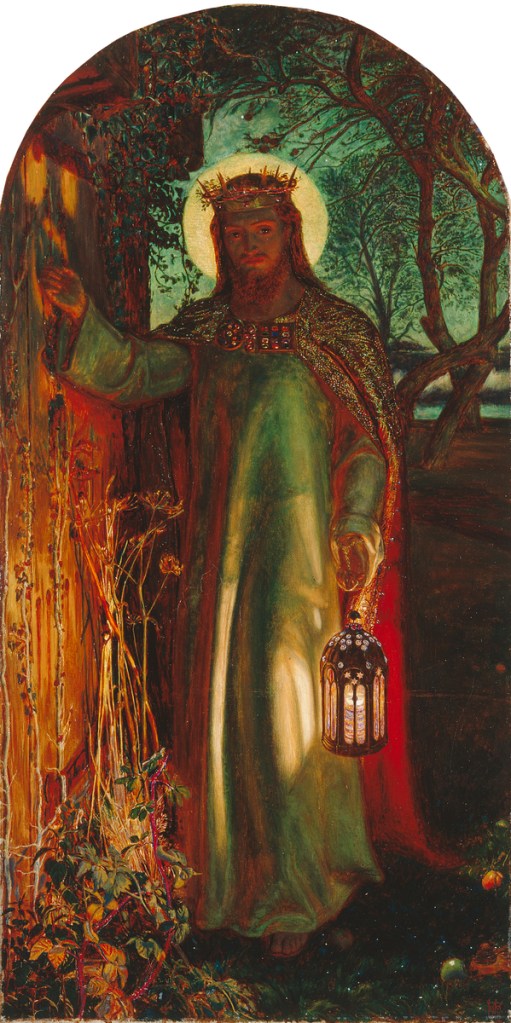






 Oracles of Os